
Highlights
- Memory is reconstructive, not a perfect recording.
- False memories are common and can feel completely real.
- Suggestion, imagination, and new information can alter memories.
- False memories affect eyewitness testimony and everyday life.
Have you ever argued with a family member about what really happened at a holiday gathering years ago? Or been completely sure you locked the door, only to find it open? Or remembered a childhood event in vivid detail, only to learn it happened differently, or not at all?
These experiences are examples of how memory can be wrong. Our memories feel like accurate recordings of the past, but in reality, they're reconstructions, and reconstructions can contain errors. False memories are surprisingly common and happen to everyone. This article explains why false memories occur, what research has revealed, and how to support a more accurate memory.
Memory Is Reconstructive
When you remember something, your brain doesn't simply play back a stored recording. Instead, it rebuilds the memory from pieces stored in different brain regions, filling in gaps with expectations, general knowledge, and information you've learned since.
This reconstructive process is usually efficient and helpful. It allows memory to be flexible and to connect experiences with knowledge. But it also means memories can change over time, and sometimes include details that never happened.
What Is a False Memory?
A false memory is a recollection of an event, or a detail of an event, that didn't happen, or happened differently than remembered. False memories can range from small errors, such as misremembering the color of a car, to entirely fabricated memories of events that never occurred.
What makes false memories so striking is that they can feel just as real and vivid as true ones. Confidence in a memory doesn't guarantee its accuracy.
Classic Research on False Memories
The Car Crash Study
In a famous 1974 study, psychologists Elizabeth Loftus and John Palmer showed people a video of a car accident. Afterward, they asked how fast the cars were going when they "smashed into" or "hit" each other. People who heard the word "smashed" estimated higher speeds. A week later, they were also more likely to falsely remember seeing broken glass, even though there was none in the video. Simply changing one word altered what people remembered.
Lost in the Mall
In the 1990s, Loftus and colleagues conducted a study in which participants were told stories about their childhood, provided by family members. One story, about getting lost in a shopping mall, was made up. A substantial minority of participants came to remember the false event, sometimes adding their own details.
Word List Experiments
In a simple experiment known as the DRM paradigm, people hear a list of related words, such as bed, rest, tired, dream, and pillow. Many later "remember" hearing the word "sleep," even though it wasn't on the list. The brain fills in the gist, creating a false memory.
Why False Memories Happen
Filling in Gaps
When parts of a memory are missing, the brain fills them in with what it expects or what usually happens.
Suggestion and Misinformation
Information you encounter after an event, such as conversations, news reports, photos, or leading questions, can blend into your original memory.
Source Confusion
Sometimes we remember information correctly but forget where it came from. You might recall a story someone told you and later believe it happened to you, or confuse something you imagined with something you experienced.
Imagination Inflation
Repeatedly imagining an event can make it feel more familiar, increasing the chance of believing it actually happened.
Reconsolidation
Each time a memory is recalled, it becomes temporarily changeable before being stored again. During this window, new information can be incorporated.
Emotion and Stress
Emotional events often feel vividly remembered, but research on "flashbulb memories" of major news events shows that details can change significantly over time, even while confidence remains high.
Social Influence
Discussing events with others can lead people to adopt each other's memories, a phenomenon sometimes called memory conformity.
Fatigue and Sleep Loss
Research suggests sleep-deprived people are more prone to false memories.
Why False Memories Matter
Eyewitness Testimony
False memories have serious real-world consequences. Mistaken eyewitness identification has been a factor in many wrongful convictions later overturned by DNA evidence in the United States. This research has led to changes in how police conduct lineups and interviews.
Everyday Life
Memory errors can lead to disagreements, forgotten tasks, and misunderstandings. Knowing that memory is fallible can encourage humility and patience with others.
Is a Fallible Memory a Bad Thing?
Not necessarily. Some researchers suggest that the reconstructive nature of memory serves useful purposes. It allows us to generalize from experiences, imagine the future, solve problems creatively, and update our knowledge. A memory that recorded everything perfectly might actually be less useful for making sense of the world.
False Memories vs. Memory Problems
Everyday false memories are a normal part of how the brain works and are not a sign of illness. However, frequent confusion, or making up information to fill memory gaps without realizing it, can sometimes occur with certain medical conditions. If you or a loved one notice significant changes in memory, talk to a doctor.
How to Support More Accurate Memory
- Pay attention: focus fully on important information as it happens
- Write things down: notes, photos, and journals provide reliable records
- Be aware of suggestion: notice how others' accounts may shape your memory
- Check sources: verify important details when possible
- Stay humble: remember that confidence doesn't equal accuracy
- Get enough sleep: supports accurate memory consolidation
- Keep your memory active: learning, recalling, and memory games keep memory systems engaged
False Memories in Families
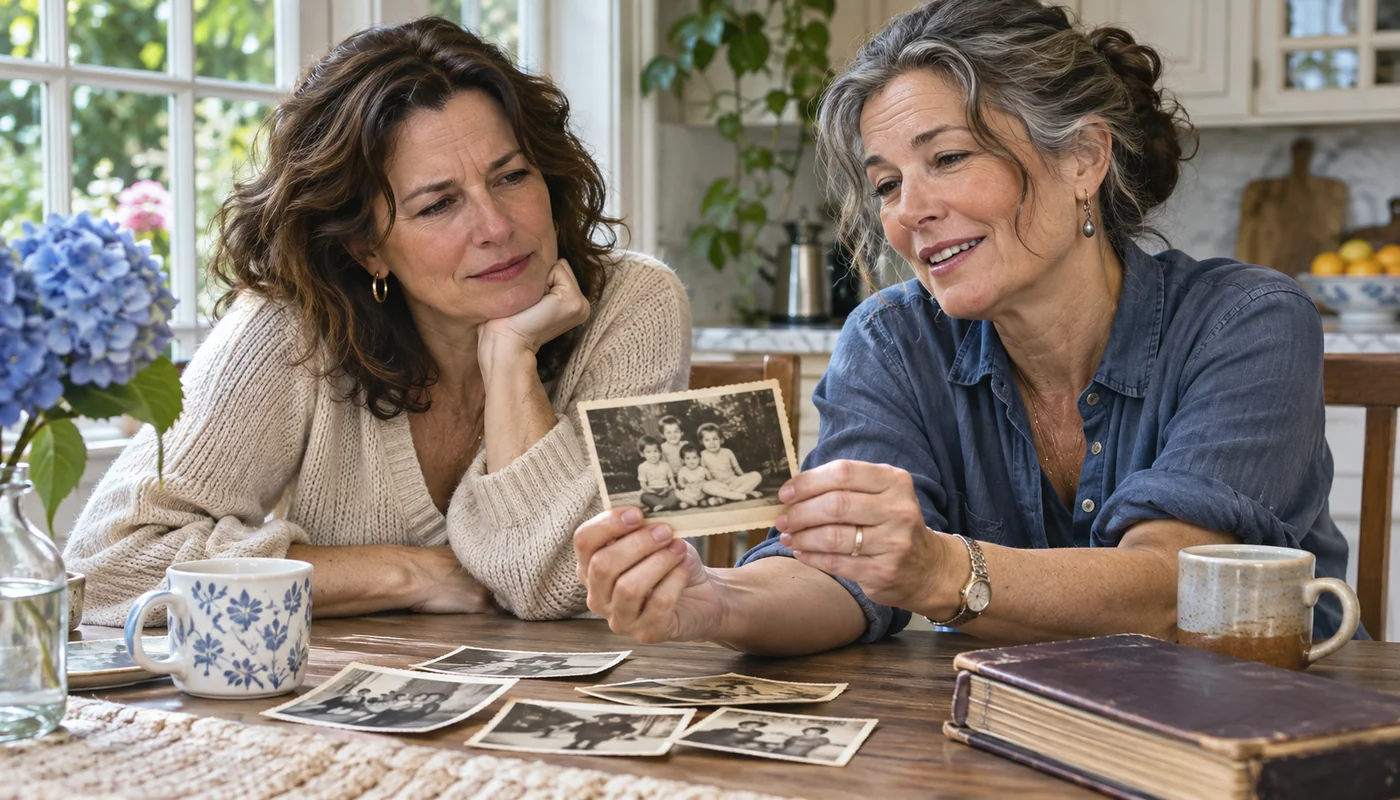
Family stories are a very common source of everyday memory mix-ups. Siblings may each remember a childhood event differently, or both may claim the same experience as their own. Old photos and frequently retold stories can create vivid "memories" of events we were too young to remember. These differences aren't a sign that anyone is lying; they reflect how memory naturally reconstructs and updates itself. Treating memory disagreements with curiosity rather than frustration can turn them into interesting conversations instead of arguments, and can even become a fun way to compare perspectives on shared history.
Frequently Asked Questions
Are false memories common?
Yes. Everyone experiences memory errors, and they're a normal part of how memory works.
Can a false memory feel real?
Yes. False memories can feel just as vivid and certain as true ones.
Can you tell if a memory is false?
Often not from the feeling alone. External evidence, such as records or photos, may be needed.
Do false memories mean something is wrong with my brain?
No. Ordinary false memories are normal. Talk to a doctor if you notice significant memory changes.
Who is most prone to false memories?
Everyone can experience them, but factors like suggestion, fatigue, and time since the event increase the risk.
Key Takeaways
- Memory is reconstructive, not a perfect recording.
- False memories are common and can feel completely real.
- Suggestion, imagination, and new information can alter memories.
- False memories affect eyewitness testimony and everyday life.
- Attention, notes, sleep, and humility support more accurate memory.
Your memory is a remarkable, creative system, but it isn't infallible. Understanding how it works can help you remember more accurately and be more understanding when memories differ.
This article provides general educational information and is not medical advice. A qualified healthcare professional can help you evaluate choices in relation to your health history, medications, and individual needs.