
Highlights
- The best brain hobbies are new, challenging, and enjoyable.
- Music, languages, dancing, and strategy games are excellent choices.
- Arts, crafts, gardening, and writing also offer strong benefits.
- Combining mental, physical, and social activity is especially powerful.
Hobbies are often seen as simple pastimes, ways to relax and fill free time. But the right hobbies can do much more. They can challenge your memory, sharpen your focus, build new brain connections, reduce stress, and connect you with other people. In fact, research suggests that people who engage in mentally stimulating leisure activities tend to keep their thinking skills sharper as they age.
The best hobby for your brain is one that you enjoy and that challenges you in some way. This article explores what makes a hobby good for the brain and shares twelve enriching ideas to try.
What Makes a Hobby Good for the Brain?
The most brain-boosting hobbies tend to combine several of these qualities:
- Novelty: learning something new creates fresh brain connections
- Challenge: requiring effort keeps the brain working hard
- Progression: allowing you to keep improving over time
- Complexity: engaging several skills at once
- Social connection: involving other people
- Physical activity: getting your body moving
- Enjoyment: keeping you motivated to continue
Research supports this. A study from the University of Texas at Dallas, led by Denise Park, found that older adults who spent several months learning demanding new skills, such as digital photography or quilting, showed improvements in memory, while those who did easier, familiar activities did not.
12 Hobbies That Are Great for the Brain
1. Learning a Musical Instrument
Playing music engages hearing, movement, memory, attention, and emotion all at once. Studies have linked musical activity with better cognitive function in older adults, and it's never too late to start. The ukulele, keyboard, and harmonica are friendly options for beginners.
2. Learning a New Language
Language learning challenges memory, listening, and mental flexibility. Some research suggests speaking more than one language may help build cognitive reserve. Apps, classes, and conversation groups make it accessible and social.
3. Dancing
Dancing combines aerobic exercise, memory for steps, coordination, rhythm, and social interaction. A well-known study published in The New England Journal of Medicine in 2003 found that frequent dancing was among the leisure activities most strongly linked with a lower risk of dementia in older adults.
4. Strategy Games
Chess, bridge, Go, and strategy board games require planning, memory, and problem-solving. Bridge adds teamwork and social contact.
5. Puzzles and Brain Games
Crosswords, sudoku, logic puzzles, and brain-training games provide quick, daily mental challenges. Brain games that adapt to your level can target specific skills such as memory, attention, and processing speed, and let you track your progress over time.
6. Reading and Book Clubs
Reading builds vocabulary, attention, and imagination. Joining a book club adds discussion, which exercises memory and reasoning and provides social connection.
7. Writing
Journaling, writing stories, composing poetry, or recording your life story engages memory, language, and creativity. Writing about your experiences can also improve emotional well-being.
8. Arts and Crafts
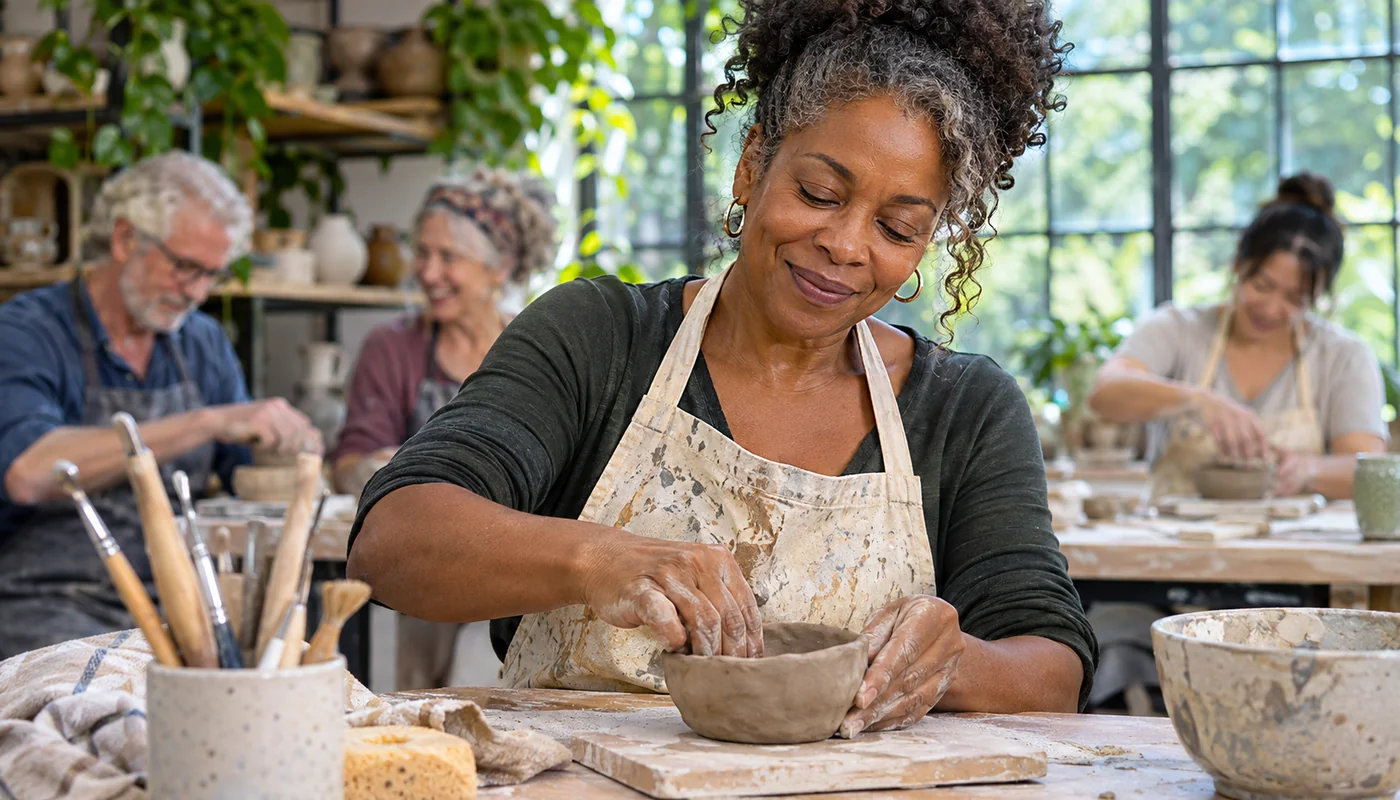
Painting, drawing, knitting, pottery, woodworking, and sewing combine creativity, fine motor skills, planning, and concentration. A study from the Mayo Clinic found that older adults who engaged in artistic activities and crafts in midlife and later life had a lower risk of developing mild cognitive impairment.
9. Gardening
Gardening involves planning, learning, problem-solving, and physical activity, plus time outdoors, which reduces stress. Some studies have linked gardening with lower dementia risk.
10. Cooking New Recipes
Trying new recipes requires following instructions, planning, multitasking, timing, and creativity. Cooking with brain-healthy ingredients adds an extra benefit.
11. Volunteering
Volunteering provides purpose, social contact, and new challenges. Research has linked volunteering with better well-being and cognitive health in older adults.
12. Photography
Learning photography, especially with a camera that has manual settings, involves technical learning, creativity, and close observation. It also gets you outdoors and exploring.
Honorable Mentions
- Bird watching: identification skills, patience, and time outdoors
- Tai chi or yoga: learning sequences while improving balance and calm
- Singing in a choir: memory, breathing, listening, and community
- Genealogy: research, problem-solving, and connecting with family history
- Model building: precision, planning, and patience
- Learning to code: logic and problem-solving
- Hiking with navigation: exercise plus map reading and spatial skills
The Power of Combining Benefits
Hobbies that combine mental challenge, physical activity, and social connection may offer the greatest brain benefits. Dancing, team sports, group hiking, choir singing, and gardening clubs are great examples. Each part supports the brain in a different way, and together they're especially powerful.
How to Choose the Right Hobby
Follow Your Interests
Think about what you've always wanted to learn or try. Curiosity is a great motivator.
Choose Something New
Familiar hobbies are enjoyable, but new ones challenge the brain more. Consider adding at least one new hobby alongside your favorites.
Start Small
Take a beginner class, borrow equipment, or try a free online tutorial before investing heavily.
Be Patient
Learning something new can feel awkward at first. That struggle is exactly what helps your brain grow.
Involve Others
Join a club, class, or group. Social hobbies are more fun and offer extra brain benefits.
Making Time for Hobbies
If your schedule is busy, try:
- Scheduling hobby time like an appointment
- Replacing some screen time with a hobby
- Combining hobbies with socializing, such as a weekly craft night with friends
- Keeping materials visible and ready to use
Hobbies on a Budget
Brain-boosting hobbies don't have to be expensive. Libraries offer free books, audiobooks, and often language-learning resources and classes. Many community centers run low-cost clubs for crafts, games, walking, and dancing. Online videos can teach you everything from drawing to guitar chords. Gardening can start with a few seeds and some pots on a windowsill. Card games need only a deck of cards, and many puzzles and brain games are free or inexpensive. The most important ingredients are curiosity and a willingness to try something new.
If you're not sure where to begin, make a list of things you enjoyed as a child or always wished you'd learned. Many people rediscover old passions or find new ones they never expected to love.
Frequently Asked Questions
What is the single best hobby for the brain?
There's no single best hobby. The best one is challenging, new to you, and something you enjoy enough to keep doing.
Are hobbies good for preventing dementia?
Mentally stimulating hobbies are linked with lower dementia risk, though no single activity can guarantee prevention.
Is it too late to start a new hobby in later life?
Not at all. Learning new skills benefits the brain at any age.
How much time should I spend on hobbies?
Even a few hours a week can make a difference. Consistency matters most.
Do passive hobbies like watching TV help?
Passive activities are relaxing, but active hobbies that require effort and learning offer more brain benefit.
Can hobbies reduce stress?
Yes. Absorbing hobbies can lower stress, improve mood, and provide a sense of accomplishment.
Key Takeaways
- The best brain hobbies are new, challenging, and enjoyable.
- Music, languages, dancing, and strategy games are excellent choices.
- Arts, crafts, gardening, and writing also offer strong benefits.
- Combining mental, physical, and social activity is especially powerful.
- It's never too late to take up a brain-boosting hobby.
Your hobbies can be a source of joy and a powerful investment in your brain's health. Pick something that sparks your curiosity, give it a try, and enjoy the journey of learning something new.
This article provides general educational information and is not medical advice. A qualified healthcare professional can help you evaluate choices in relation to your health history, medications, and individual needs.