
Highlights
- Online memory tests can encourage reflection but can't diagnose problems.
- Doctors use brief screening tests like the Mini-Cog, MMSE, and MoCA.
- Neuropsychological testing provides a detailed picture of memory and thinking.
- Results are interpreted alongside health, mood, and history.
If you've been worried about your memory, you may have searched for a memory test online. There are dozens of quizzes and apps that promise to measure your memory or check for signs of dementia. You may also have heard of the short tests doctors use during checkups. But what do these tests actually measure, how accurate are they, and what can they really tell you?
This article explains the different types of memory tests, from informal online quizzes to professional assessments, what each can and can't tell you, and how to use them wisely.
Why Test Memory?
Memory tests can serve several purposes:
- Providing a snapshot of memory and thinking skills
- Identifying people who may need further assessment
- Tracking changes over time
- Helping diagnose conditions like mild cognitive impairment or dementia
- Offering reassurance when results are normal
No single test can diagnose dementia on its own. Tests are one piece of a bigger picture that includes medical history, examinations, and sometimes brain scans and blood tests.
Online Memory Tests and Apps
What They Are
Online memory tests range from simple quizzes, like remembering a list of words or a sequence of numbers, to more structured assessments developed by researchers. Brain-training apps and games may also track scores on memory, attention, and speed tasks.
What They Can Do
- Give a general sense of how you perform on specific memory tasks
- Help you notice trends if you take them regularly over time
- Encourage you to think about your memory and seek help if needed
- Provide an engaging way to exercise your memory
Their Limitations
- Most are not validated diagnostic tools
- Results can be affected by tiredness, distraction, unfamiliarity with technology, mood, and vision or hearing problems
- They can't account for your personal history, education, or health
- They may cause unnecessary worry or false reassurance
Think of online tests as a starting point for reflection, not a verdict.
Common Tests Doctors Use
Doctors use brief screening tests to check memory and thinking. These usually take 5 to 20 minutes.
Mini-Cog
A quick test involving remembering three words and drawing a clock. It takes about three minutes and is commonly used in primary care.
Mini-Mental State Examination (MMSE)
One of the most widely used tests, with 30 points covering orientation (date and place), memory, attention, language, and copying a drawing.
Montreal Cognitive Assessment (MoCA)
A 30-point test that's often more sensitive for detecting mild cognitive impairment. It includes tasks such as connecting numbers and letters in order, drawing a clock, naming animals, remembering words, and answering questions about the date and place.
Other Screening Tools
Doctors may use other brief tests, such as the Saint Louis University Mental Status (SLUMS) exam, or questionnaires completed by family members about changes they've noticed.
What a Screening Test Can Tell You
- Whether your memory and thinking are within the expected range
- Whether further assessment would be helpful
- Which areas may be affected, such as memory, attention, or language
Screening tests are designed to flag possible problems, not to provide a diagnosis. Results are interpreted alongside education level, age, language, and other factors.
Detailed Neuropsychological Testing
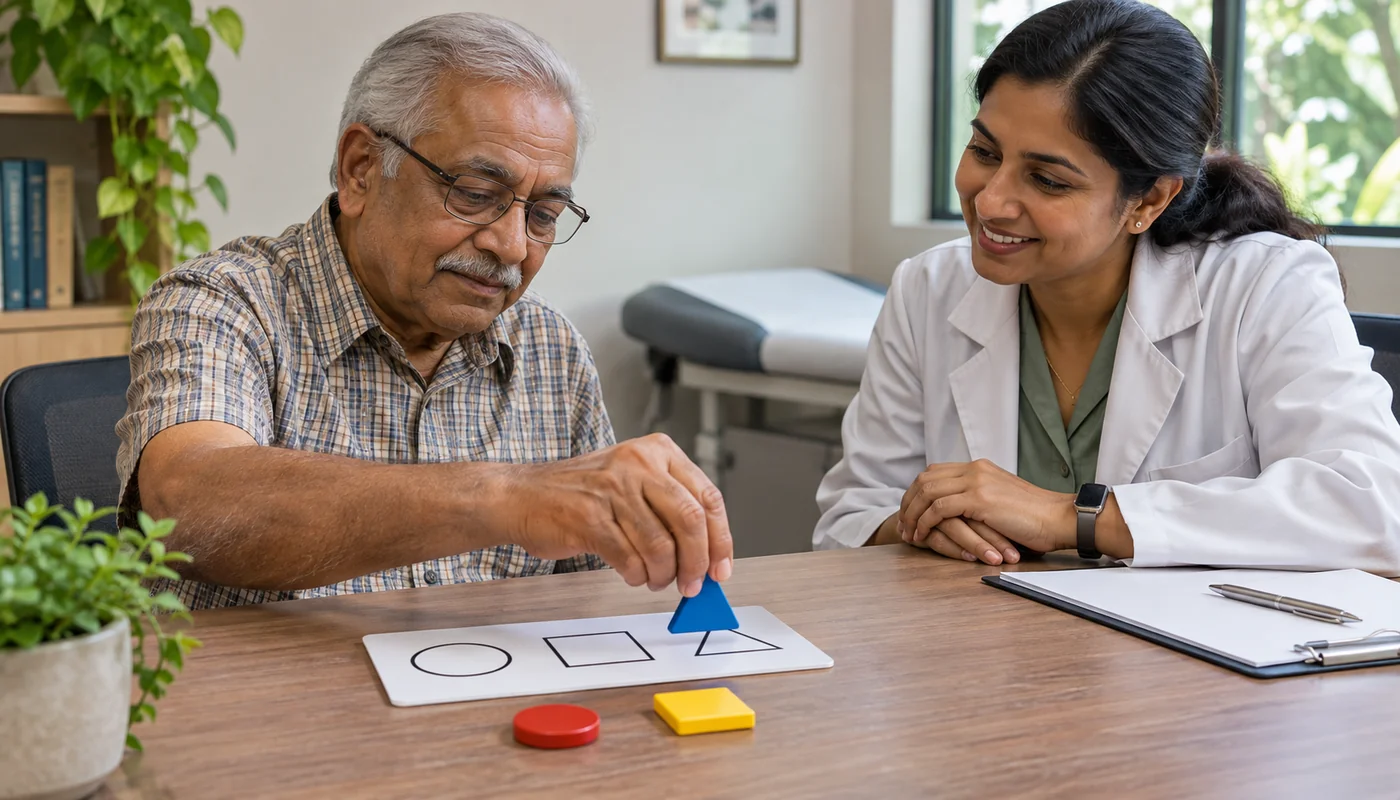
If screening suggests a problem, or the picture is unclear, a doctor may refer you for neuropsychological testing. This is a comprehensive assessment by a specialist, usually a neuropsychologist, which can take several hours. It examines:
- Different types of memory
- Attention and concentration
- Language
- Problem-solving and reasoning
- Visual and spatial skills
- Processing speed
- Mood and emotional factors
Neuropsychological testing can help distinguish between normal aging, mild cognitive impairment, different types of dementia, and other conditions such as depression. It can also identify strengths to build on.
Other Tests That May Be Part of an Assessment
- Blood tests: to check for treatable causes like vitamin B12 deficiency, thyroid problems, and infections
- Brain scans: MRI or CT to look for strokes, tumors, or shrinkage
- Specialized scans or tests: such as PET scans, spinal fluid tests, or newer blood tests that detect Alzheimer's-related proteins
- Hearing and vision checks
Preparing for a Memory Test
To get the most accurate results:
- Get a good night's sleep beforehand
- Bring your glasses and hearing aids
- Eat and drink normally
- Bring a list of medications
- Bring a family member or friend if possible
- Try to relax; it's normal to feel a little nervous
You don't need to study or practice. The goal is to see how your memory works normally.
Understanding Your Results
If your results are normal, that's reassuring, though you can still raise concerns if things change. If results suggest a problem, it's not necessarily dementia. Many factors, including anxiety, depression, poor sleep, medications, and hearing problems, can affect scores. Your doctor will explain what the results mean and what, if anything, should happen next.
Tracking Your Memory Over Time
One of the most useful things about memory tests is comparing results over time. A single score is a snapshot; repeated testing shows whether things are stable, improving, or declining. Some doctors repeat screening tests at regular visits. Between appointments, keeping notes on your memory and using engaging memory games can help you stay aware of your own patterns while keeping your brain active.
Can You Improve Your Test Scores?
Practicing specific test questions isn't helpful and can make results less accurate. But improving the underlying health of your brain can help your memory in everyday life. Regular exercise, good sleep, managing stress, staying socially active, eating well, and challenging your mind all support memory and thinking.
Questions to Ask Your Doctor About Testing
- Which test are you using, and what does it measure?
- What do my results mean for someone of my age and background?
- Could anything else, like sleep, mood, or medication, have affected my score?
- Do I need further tests or a specialist referral?
- When should I be retested, and what should I watch for in the meantime?
Frequently Asked Questions
Can an online test tell me if I have dementia?
No. Online tests can't diagnose dementia. A doctor's assessment is needed.
What is the most common memory test doctors use?
Brief tests like the Mini-Cog, MMSE, and MoCA are among the most common.
How long does a memory test take?
Screening tests take 5 to 20 minutes. Detailed neuropsychological testing can take several hours.
Can anxiety affect memory test results?
Yes. Anxiety, tiredness, and other factors can lower scores.
Is there a blood test for memory problems?
Blood tests check for treatable causes, and newer blood tests can detect Alzheimer's-related proteins in people with symptoms.
Should I take a memory test if I'm not worried?
Routine screening isn't usually needed without concerns, but you can discuss brain health with your doctor at checkups.
Key Takeaways
- Online memory tests can encourage reflection but can't diagnose problems.
- Doctors use brief screening tests like the Mini-Cog, MMSE, and MoCA.
- Neuropsychological testing provides a detailed picture of memory and thinking.
- Results are interpreted alongside health, mood, and history.
- Many factors affecting test results are treatable.
Memory tests are useful tools, but they're only part of the story. If you're concerned about your memory, talk to a doctor, who can choose the right tests and help you understand what they mean.
This article provides general educational information and is not medical advice. A qualified healthcare professional can help you evaluate choices in relation to your health history, medications, and individual needs.