
Highlights
- Memory games are fun and beneficial for adults of all ages.
- There are great options for playing alone, with a partner, or in groups.
- Many games require no equipment.
- Memory techniques make games more effective and transferable.
Memory games aren't just for kids. Adults of all ages can enjoy games that challenge recall, sharpen attention, and bring a little friendly competition into daily life. Whether you're looking for a quiet solo activity, a lively game for family night, or a way to keep your mind engaged as you age, memory games offer a fun and flexible option.
This guide shares a variety of memory games for adults, including games to play on your own, with a partner, or in a group. Most require little or no equipment, and many can be played anywhere.
Why Play Memory Games?
Memory games give your brain practice encoding, holding, and retrieving information. They encourage focused attention, since you can't remember what you didn't notice. They also add novelty and enjoyment to your day. When played with others, they offer the added benefits of laughter and social connection, both of which support brain health.
Memory Games to Play Alone
1. Matching Pairs (Concentration)
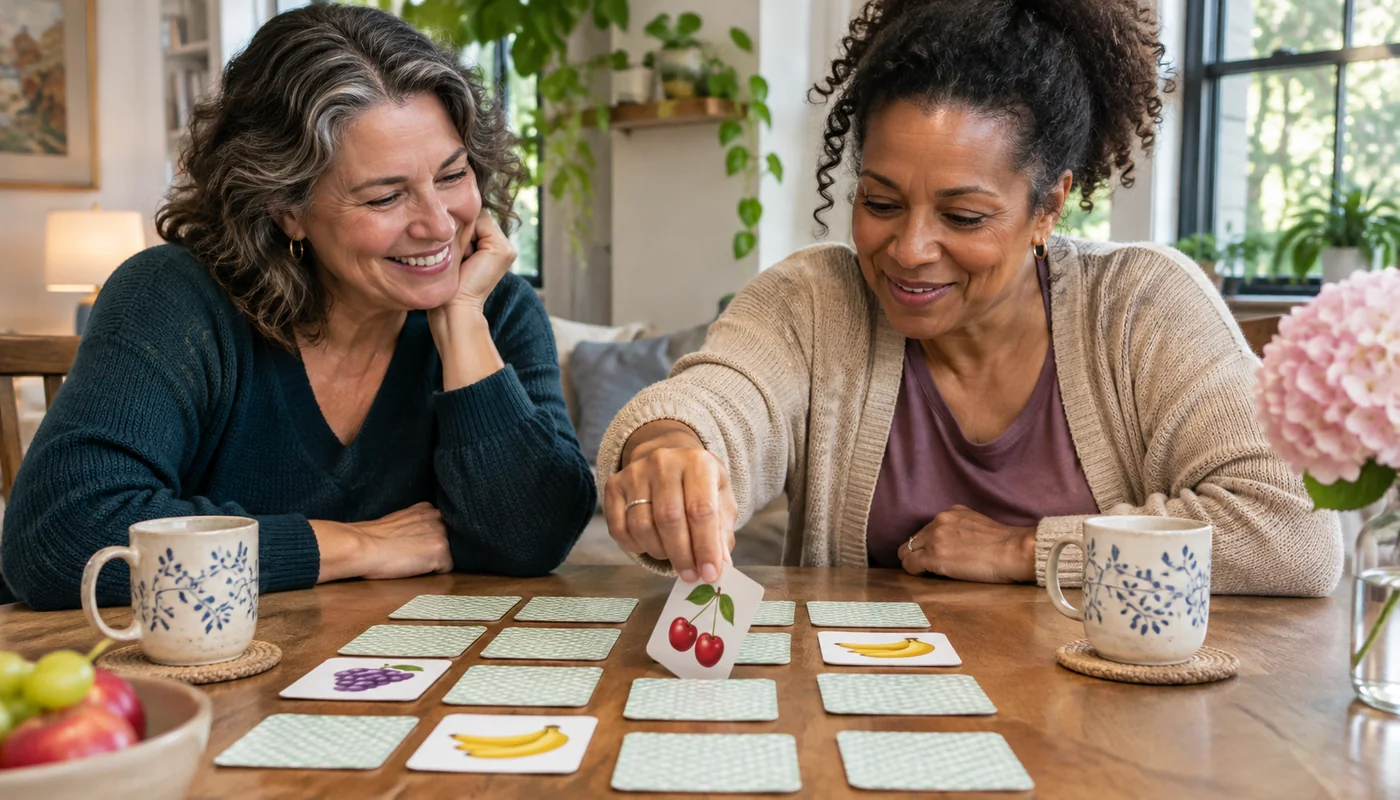
Lay a deck of cards face down in a grid. Flip two cards at a time, trying to find matching pairs. If they don't match, turn them back over and remember their positions. Track how many turns it takes to clear the board and try to beat your record.
2. The Grocery List Challenge
Before going shopping, memorize your list of 10 to 15 items. Try to buy everything without looking at the list, keeping it in your pocket as a backup. Grouping items by category or creating a story linking them can help.
3. Kim's Game
Place 10 to 20 small objects on a tray. Study them for one minute, then cover the tray and write down as many items as you can remember. For an extra challenge, have someone remove one item and see if you can identify what's missing.
4. Number Recall
Write down a sequence of random digits, study it briefly, cover it, and try to repeat it. Start with five digits and work your way up.
5. Story Recall
Read a short news story or paragraph, then put it away and try to retell it in as much detail as possible. Check how much you remembered.
6. Daily Recap
Each evening, recall your day in order: what you ate, who you spoke with, where you went, and what you noticed. This simple practice strengthens memory for everyday events.
7. Memorize a Poem or Speech
Choose a short poem, famous speech, or passage you enjoy, ideally one in the public domain, and memorize a few lines each day.
Memory Games for Two
8. Copycat Sequence
One person says a word, number, or action. The other repeats it and adds a new one. Take turns building the sequence until someone makes a mistake.
9. What's Changed?
One person studies a room or a table setting. They leave, and the other person changes two or three things. The first person returns and tries to spot the changes.
10. Twenty Questions With Recall
Play twenty questions, then at the end, both players try to recall all the questions asked in order.
11. Matching Pairs Competition
Play the classic matching card game with a partner, taking turns. The player who collects the most pairs wins.
Memory Games for Groups
12. I Went to the Market
The first person says, "I went to the market and bought apples." The next person repeats the sentence and adds an item: "I went to the market and bought apples and bread." Continue around the group, adding an item each time. Anyone who forgets an item is out. For a twist, add items in alphabetical order.
13. Name Game
Great for new groups. Each person says their name with an adjective starting with the same letter, such as "Joyful Janet." Each person repeats all previous names before adding their own.
14. Memory Trivia
Watch a short video or look at a detailed picture together. Afterward, a host asks questions about the details, and players compete to answer correctly.
15. Story Chain
One person begins a story with a sentence. Each person repeats the entire story so far before adding a sentence. The story grows, and so does the memory challenge.
16. Song Lyrics Challenge
Players hum or describe a tune, and others try to recall the song title and artist. This taps into long-term memory and often sparks fun conversations and nostalgia.
Board and Card Games That Build Memory
- Matching tile games
- Card games that require tracking played cards, like bridge, hearts, or rummy
- Trivia board games
- Strategy games that require remembering opponents' moves
Digital Memory Games
Many apps and online brain games offer memory challenges, such as sequence recall, matching, and spatial memory tasks. They often track progress and adjust difficulty, which can be motivating. Balance screen-based games with offline and social activities for variety.
Tips to Get More From Memory Games
- Focus fully: attention is the foundation of memory
- Use memory techniques: try visualization, chunking, and association
- Gradually increase difficulty: add more items or reduce study time
- Play regularly: short, frequent sessions work well
- Keep it fun: enjoyment keeps you coming back
Memory Techniques to Try During Games
- Chunking: group numbers or items into smaller sets
- Visualization: create vivid mental pictures
- Story method: link items together in a story
- Memory palace: place items along a familiar route in your mind
- Rhymes and acronyms: make information more memorable
Hosting a Memory Game Night
A memory game night is an easy, low-cost way to gather friends or family. Start with a warm-up like the Name Game, even if everyone already knows each other, using silly adjectives for laughs. Move on to a round of I Went to the Market, then a team-based Memory Trivia challenge using a photo or short video. Finish with a calmer card game where everyone can chat while they play.
Keep score if your group enjoys competition, or play just for fun. Small prizes, such as homemade treats or choosing the next game, add excitement. Most importantly, keep the mood light so that everyone feels comfortable, regardless of their memory skills. Laughter at forgotten items is part of the fun.
Adapting Games for Different Abilities
Memory games can be easily adjusted for different ages and abilities. For younger players or those who find games challenging, use fewer items, allow more study time, or offer gentle hints. For experienced players, increase the number of items, shorten study time, or add rules like alphabetical order. Mixed-age groups can pair a younger player with an older one as a team, which encourages cooperation and shared success.
For people living with memory changes, choose games that emphasize enjoyment and long-term memory, such as recalling favorite songs, places, or family traditions. The goal is connection and fun rather than perfect performance.
Frequently Asked Questions
Do memory games improve memory?
People usually improve at the games they practice, and the focus and techniques involved can be helpful in daily life.
What memory games are good for seniors?
Matching pairs, I Went to the Market, Kim's Game, and card games are all great choices.
How often should adults play memory games?
A few times a week or a short daily session works well.
Can memory games be played without equipment?
Yes. Many, like I Went to the Market and Story Chain, need nothing at all.
Are memory games good for social connection?
Yes. Group games add laughter and conversation.
Key Takeaways
- Memory games are fun and beneficial for adults of all ages.
- There are great options for playing alone, with a partner, or in groups.
- Many games require no equipment.
- Memory techniques make games more effective and transferable.
- Combining memory games with exercise, sleep, and social activity supports brain health.
Memory games bring together challenge, laughter, and connection. Whether you're playing solo with a deck of cards or gathering friends for a round of I Went to the Market, you're giving your mind a joyful workout.
This article provides general educational information and is not medical advice. A qualified healthcare professional can help you evaluate choices in relation to your health history, medications, and individual needs.