
Highlights
- Memory improves with regular, challenging practice.
- Drills like digit span, Kim's game, and daily recall train different memory skills.
- Techniques like the memory palace help in real life.
- Short daily sessions and tracking progress keep you motivated.
Just as physical exercise strengthens your muscles, mental exercise can help strengthen your memory. The brain adapts to the challenges you give it, building and reinforcing connections each time you practice. And the best part is that many effective memory exercises are simple, free, and can be done almost anywhere.
This article shares fifteen practical memory exercises, from quick daily drills to techniques used by memory champions. Some train short-term and working memory, others strengthen long-term recall, and many are fun to do with friends or family.
How Memory Exercises Help
Memory exercises work by:
- Training attention: the first step to remembering anything
- Strengthening working memory: your ability to hold and use information
- Practicing retrieval: recalling information makes it easier to recall again
- Teaching strategies: such as visualization and chunking that you can use in daily life
- Building confidence: seeing improvement reduces memory worries
Research shows people reliably improve at the memory skills they practice, and learning memory strategies, like those used in the large ACTIVE study, can produce lasting benefits.
Short-Term and Working Memory Drills
1. Digit Span
Have someone read you a string of numbers, or use an app, and repeat them back. Start with four or five digits and add one each time you succeed. For an extra challenge, repeat the numbers backward.
2. Shopping List Recall
Before going to the store, memorize your list of 8 to 12 items. Try to shop without looking, then check how many you remembered.
3. Backward Spelling
Spell words backward in your head, starting with short words and moving to longer ones. This trains working memory and focus.
4. Mental Math
Add up prices while shopping, calculate tips, or count backward from 100 by sevens. Holding numbers in mind exercises working memory.
5. Sequence Games
Play games that show a sequence of lights, colors, or tiles that you must repeat in order. Each round adds a step.
Visual and Spatial Memory Drills
6. Kim's Game
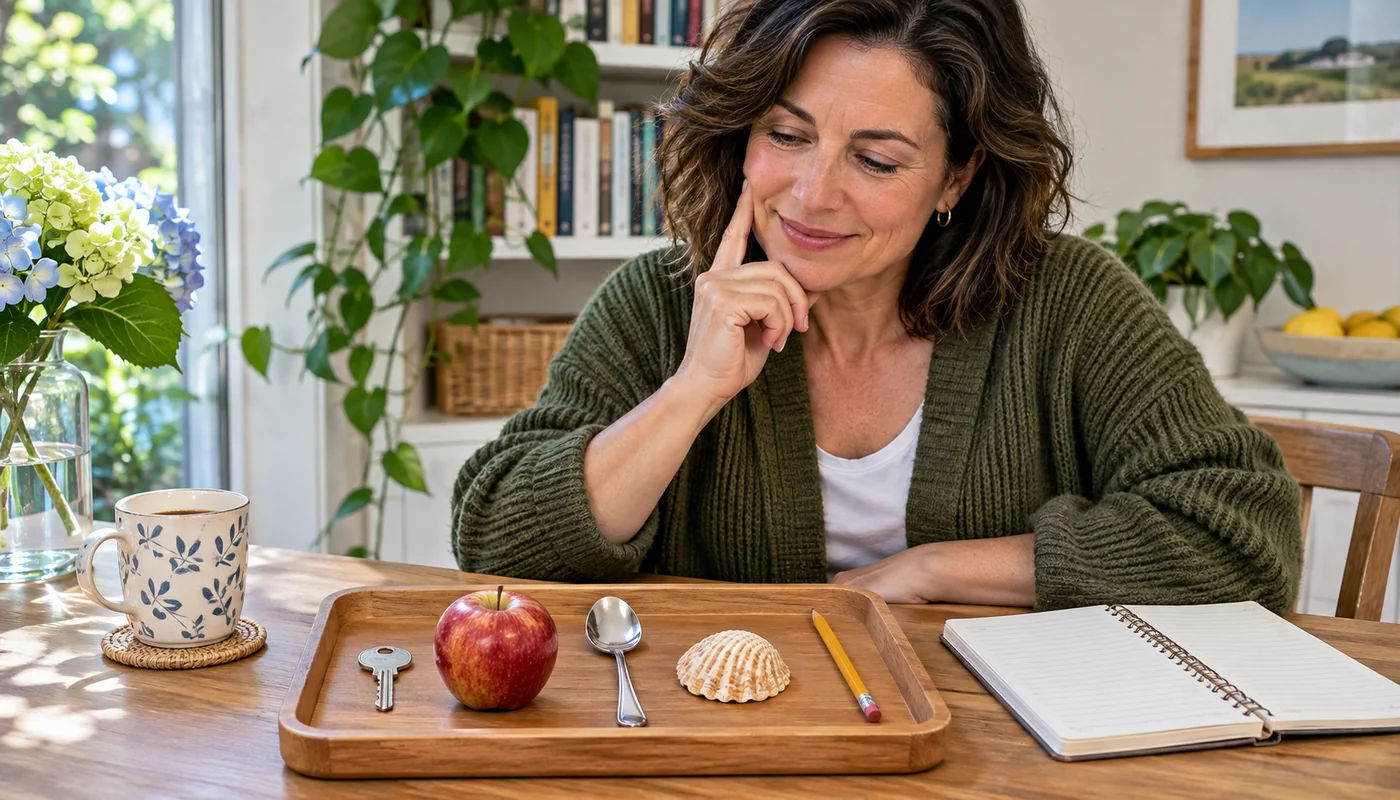
Place 10 to 20 small objects on a tray. Study them for one minute, cover the tray, and write down as many as you can remember. For a variation, have someone remove one item and guess which is missing.
7. Matching Pairs
Lay a deck of cards face down and turn them over two at a time to find pairs. Try to beat your previous number of turns.
8. Draw From Memory
Look at a simple picture or map for a minute, then draw it from memory. Compare and notice what you missed.
9. Route Recall
After a walk or drive, mentally retrace the route, noting landmarks along the way. Try navigating somewhere familiar without GPS.
Long-Term Memory Drills
10. Daily Recall
Each evening, recall your day in order, from waking up to the present. Include details: what you ate, who you spoke to, what you saw. This strengthens episodic memory.
11. Learn Something by Heart
Memorize a short poem, a speech, a recipe, song lyrics you've written yourself, or a list of facts. Review it over several days until you can recite it easily.
12. Teach It Back
After reading an article or watching a documentary, explain the main points to someone else, or out loud to yourself, without looking.
13. Spaced Flashcards
Make flashcards for things you want to learn, such as vocabulary in a new language, names of birds, or capital cities. Review them over increasing intervals: a day later, three days later, a week later.
Memory Technique Drills
14. The Memory Palace
Choose a familiar route, like walking through your home. Place vivid images of items you want to remember at specific spots along the way. To recall, mentally walk the route. Start with five items, then build up to ten or more.
15. Name and Face Practice
When you meet someone new, repeat their name, link it to a feature or association, and use it in conversation. You can also practice with photos of people from magazines or online, paired with made-up names.
A Simple 10-Minute Daily Memory Workout
- Minutes 1 to 3: Digit span practice
- Minutes 4 to 6: Kim's game or matching pairs
- Minutes 7 to 8: Memorize five items using a memory palace
- Minutes 9 to 10: Recall the items and review yesterday's events
Rotate exercises through the week to keep things interesting and train different memory skills.
Tips for Getting the Most From Memory Exercises
Keep It Challenging
Increase difficulty as you improve. Add more items, more digits, or less study time.
Be Consistent
Short daily practice is more effective than occasional long sessions.
Track Your Progress
Write down scores or use apps and games that track results. Seeing progress is motivating.
Apply It to Real Life
Use your memory skills for everyday tasks: shopping lists, phone numbers, names, and directions.
Make It Social
Play memory games with friends, family, or grandchildren for added fun and connection.
Mix in Brain Games
Digital memory games that adapt to your level can add variety and structure to your practice.
Support Memory With Healthy Habits
Memory exercises work best alongside:
- Regular physical exercise
- Seven to nine hours of sleep
- A brain-healthy diet
- Stress management
- Social connection
- Learning new skills
Memory Exercises for Different Situations
On a Commute
Try remembering license plates, recalling the names of stops in order, or reviewing flashcards on your phone. If you're a passenger, mentally map the route and notice landmarks.
While Waiting
Instead of reaching for social media, practice backward spelling, recite a memorized poem, or recall what you did yesterday in detail.
With Grandchildren
Play matching games, "I went to the market and bought...", or Kim's game together. Children love these games, and they give your memory a workout too.
Before Bed
Review the day in order, or go over something you're learning. Reviewing before sleep can help strengthen memories overnight.
Signs Your Memory Is Improving
After a few weeks of regular practice, you may notice you can remember longer number strings, recall more items from your shopping list, or remember names more easily after introductions. You might also feel more confident and less anxious about everyday lapses. Keep a simple log so you can look back and see how far you've come. Progress is rarely perfectly smooth, but over time the trend is usually upward.
Frequently Asked Questions
Do memory exercises really work?
Yes, people improve at the skills they practice, and memory strategies can help in daily life.
How often should I do memory exercises?
Ten to fifteen minutes a day, most days of the week, is a great goal.
What is the best memory exercise?
There's no single best one. A mix of working memory drills, recall practice, and memory techniques is most effective.
Are memory exercises good for seniors?
Yes. Older adults can improve memory with practice and strategies.
Can memory exercises prevent dementia?
No single activity can prevent dementia, but staying mentally active is linked with healthier brain aging.
Key Takeaways
- Memory improves with regular, challenging practice.
- Drills like digit span, Kim's game, and daily recall train different memory skills.
- Techniques like the memory palace help in real life.
- Short daily sessions and tracking progress keep you motivated.
- Combine exercises with healthy habits for the best results.
Your memory is a skill you can strengthen. Pick a few of these drills, practice a little each day, and enjoy watching your memory grow stronger.
This article provides general educational information and is not medical advice. A qualified healthcare professional can help you evaluate choices in relation to your health history, medications, and individual needs.