
Highlights
- Daily puzzles provide regular mental exercise and enjoyment.
- Frequent puzzlers tend to perform better on thinking tests.
- Variety and challenge maximize the benefits.
- Puzzles can reduce stress and lift mood.
For many people, the day isn't complete without a puzzle. The morning crossword with coffee, a sudoku on the train, a jigsaw spread across the dining table, or a quick word game before bed. Puzzles are relaxing, satisfying, and fun. But are they also good for your brain, and is doing them every day worthwhile?
Research suggests that a daily puzzle habit can be a healthy part of keeping your mind active, especially when you keep it varied and challenging. This article explores the benefits of daily puzzles, what science says, and how to get the most from your puzzle time.
What Puzzles Do for Your Brain
Different puzzles exercise different mental skills:
- Crosswords: vocabulary, word retrieval, general knowledge, and memory
- Sudoku: logic, working memory, and pattern recognition
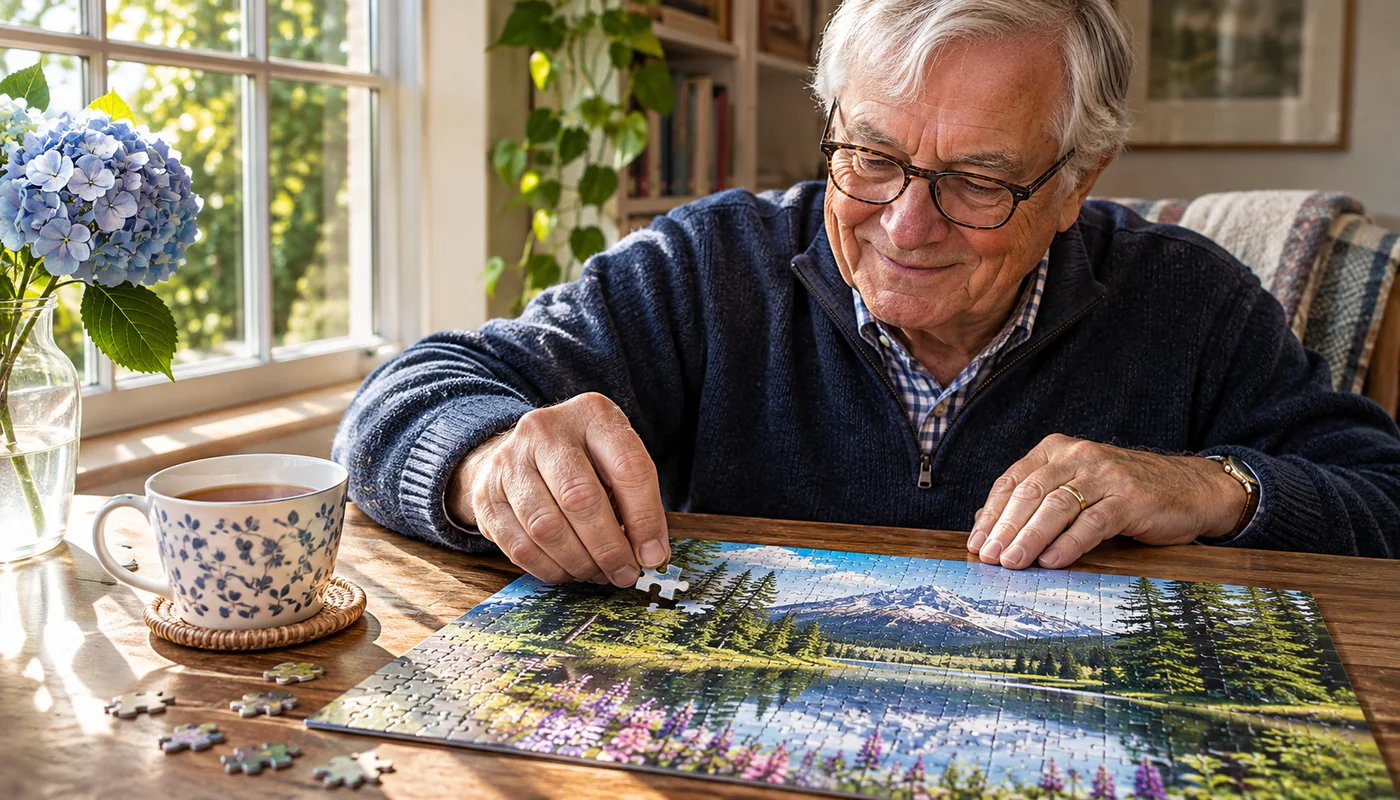
- Jigsaw puzzles: visual and spatial reasoning, attention to detail, and patience
- Word searches: visual scanning and attention
- Logic puzzles: reasoning, planning, and problem-solving
- Anagrams and word games: language, flexibility, and speed
- Number puzzles: arithmetic and working memory
- Riddles and lateral thinking puzzles: creativity and flexible thinking
What Research Shows
Puzzle Players Tend to Have Sharper Minds
A large UK study led by researchers at the University of Exeter and King's College London, published in 2019, looked at more than 19,000 adults aged 50 and over. People who reported doing word and number puzzles more often performed better on tests of attention, reasoning, and memory. On some measures, frequent puzzlers performed at a level similar to people several years younger.
Mentally Stimulating Activities and Dementia Risk
A 2023 study of more than 10,000 older Australians, published in JAMA Network Open, found that people who regularly engaged in activities such as puzzles, games, and cards had a lower risk of developing dementia over about a decade.
Jigsaw Puzzles
A German study published in 2021 found that jigsaw puzzling engages many visual and spatial thinking skills. While a five-week puzzling program didn't produce broad cognitive improvements compared with a control group, the researchers noted that long-term puzzling might still contribute to cognitive health.
An Important Caveat
Most of this research is observational, which means it shows a link but can't prove that puzzles cause better thinking. It's possible that people with sharper minds simply enjoy puzzles more. Still, puzzles are a low-risk, enjoyable way to keep your brain engaged.
Benefits of a Daily Puzzle Habit
Regular Mental Exercise
A daily puzzle provides consistent mental challenge. Like physical exercise, regularity matters more than occasional intensity.
Better Focus
Puzzles require you to concentrate on one task, a valuable counterbalance to the constant distractions of modern life.
Stress Relief
Many people find puzzles calming and absorbing, offering a break from worries. This state of focused absorption can feel similar to meditation.
Mood Boost
Solving a puzzle brings a sense of accomplishment. The "aha" moment of figuring something out triggers a satisfying feeling of reward.
Structure and Routine
A daily puzzle can anchor your routine, giving your day a pleasant ritual to look forward to.
Social Connection
Puzzles can be shared: doing a crossword with a partner, working on a jigsaw with family, or competing in word games with friends.
How to Get the Most From Daily Puzzles
Keep It Challenging
Once a puzzle type becomes easy, your brain gets less of a workout. Move up a level, such as from easy to medium sudoku, or try the harder weekend crossword.
Mix It Up
Doing the same puzzle every day trains a narrow set of skills. Rotating between word, number, logic, and visual puzzles gives a broader workout.
Try New Types
Novelty is powerful for the brain. Try a puzzle type you've never done, such as cryptic crosswords, nonograms, KenKen, or chess problems.
Add a Time Element
Occasionally timing yourself adds challenge for processing speed. Try to beat your personal best.
Use Digital Brain Games Too
Brain games can complement traditional puzzles. Many adapt to your skill level automatically and target specific abilities like memory, attention, and speed.
Don't Stress Over Mistakes
Struggling with a puzzle is part of the benefit. If you get stuck, take a break; solutions often come when you return.
Can You Do Too Many Puzzles?
Puzzles are healthy, but balance matters. If puzzles replace physical activity, social time, or sleep, you may miss out on other important brain benefits. Long periods of sitting aren't good for overall health. Aim to make puzzles one part of a well-rounded, active lifestyle.
A Varied Weekly Puzzle Plan
- Monday: Crossword
- Tuesday: Sudoku
- Wednesday: Logic puzzle
- Thursday: Word game or anagrams
- Friday: Brain-training games for memory and speed
- Weekend: Jigsaw puzzle or board game with family
Combine Puzzles With Other Brain-Healthy Habits
For the greatest benefit, pair your daily puzzle with:
- Regular physical activity
- Good sleep
- A brain-healthy diet
- Social connection
- Learning new skills
- Managing stress
Puzzles for Different Moods and Moments
One of the joys of puzzles is that there's one for every situation:
- When you want to relax: a jigsaw puzzle or word search offers gentle, absorbing focus.
- When you want a stretch: a cryptic crossword, a hard sudoku, or a logic grid will make you work.
- When you have five minutes: a quick word game or brain game fits into a coffee break.
- When you want company: a shared crossword, a family jigsaw, or a trivia quiz turns puzzling into a social event.
- Before bed: a calm, low-stakes paper puzzle can help you unwind without screens.
Making Puzzles Part of Your Routine
The easiest way to build a daily puzzle habit is to link it to something you already do. Keep a puzzle book by your favorite chair, do a crossword with your morning coffee, or solve a quick brain game during your lunch break. Keep a pencil and puzzle book in your bag for waiting rooms and journeys. When puzzles are easy to reach, they naturally become part of your day, and your brain gets a regular, enjoyable workout without any extra effort. Over weeks and months, those few minutes add up to hours of valuable mental exercise.
Frequently Asked Questions
Are puzzles good for your brain?
Yes. Puzzles provide mental stimulation and are linked with better thinking skills in older adults.
How long should I spend on puzzles each day?
Fifteen to thirty minutes is a good amount for most people.
Which puzzle is best for the brain?
There's no single best puzzle. Variety offers the broadest benefits.
Do puzzles prevent dementia?
They're not proven to prevent dementia, but regular mental activity is linked with lower risk.
Are jigsaw puzzles good for seniors?
Yes. They engage visual and spatial skills, are relaxing, and can be enjoyed with others.
Are online puzzles as good as paper ones?
Both offer similar mental challenges. Choose whichever you enjoy most.
Key Takeaways
- Daily puzzles provide regular mental exercise and enjoyment.
- Frequent puzzlers tend to perform better on thinking tests.
- Variety and challenge maximize the benefits.
- Puzzles can reduce stress and lift mood.
- Balance puzzles with exercise, social time, and sleep.
A daily puzzle is a small pleasure with real benefits for your mind. Keep it varied, keep it challenging, and enjoy the satisfaction of solving something new every day.
This article provides general educational information and is not medical advice. A qualified healthcare professional can help you evaluate choices in relation to your health history, medications, and individual needs.