
Highlights
- Phone use before bed can delay sleep and reduce sleep quality.
- Light, mental stimulation, and lost time all contribute.
- Night mode helps a little, but less screen time helps more.
- Charge your phone outside the bedroom and create a screen-free wind-down.
For many people, the last thing they see before falling asleep is a phone screen. A quick check of messages turns into scrolling social media, reading the news, watching videos, or playing a game. Before you know it, an hour has passed, and you're more awake than when you started.
Using your phone in bed has become one of the most common nighttime habits. But is it harming your sleep, and your brain? Research suggests it can, though the reasons are more nuanced than "blue light is bad." This article explains how phones affect sleep and offers practical tips for a healthier bedtime routine.
How Phones Can Affect Sleep
1. Light Exposure
Your body clock relies on light and darkness to know when to feel alert and when to feel sleepy. In the evening, darkness signals your brain to release melatonin, a hormone that helps you fall asleep.
Screens emit light, including blue wavelengths, which are especially effective at signaling "daytime" to your brain. Exposure to bright light in the evening can suppress melatonin and delay your body clock.
A well-known 2015 study from Harvard, published in PNAS, compared people who read on a light-emitting e-reader before bed with those who read a printed book. Those using the e-reader took longer to fall asleep, had lower evening melatonin levels, had less REM sleep, and felt less alert the next morning.
2. Mental Stimulation
Many researchers now believe that what you do on your phone may matter even more than the light. Social media, news, emails, games, and videos keep your brain engaged and alert. Emotional content, such as an upsetting news story or a stressful work email, can trigger stress responses that make it harder to relax.
3. Lost Time
Phones are designed to be engaging. Endless feeds, autoplay videos, and notifications make it easy to keep scrolling much longer than intended, pushing bedtime later and cutting into sleep time. Some researchers call this "bedtime procrastination."
4. Nighttime Interruptions
Notifications, vibrations, and the temptation to check your phone if you wake during the night can disrupt sleep.
Why It Matters for Your Brain
Sleep is essential for memory, focus, mood, and long-term brain health. During sleep, your brain consolidates memories and appears to clear waste products. Regularly losing sleep to late-night phone use can leave you foggy, irritable, and less able to concentrate the next day. Over time, chronic sleep loss is linked with poorer cognitive health.
Does Night Mode Help?
Many phones have a night mode or blue light filter that shifts the screen to warmer colors. This may reduce some light effects, but research suggests the benefits are modest. A 2021 study from Brigham Young University found that night mode alone didn't significantly improve sleep. Reducing overall screen use, and especially stimulating content, before bed appears to be more important.
Is All Screen Use Equally Bad?
Not necessarily. Effects can depend on:
- What you're doing: calm, passive activities like listening to soothing music or an audiobook are less stimulating than social media, gaming, or work emails
- Brightness: a dim screen held further away is less disruptive than a bright screen close to your face
- Timing: screen use in the hour before bed is more likely to affect sleep
- Duration: a quick check is different from an hour of scrolling
- Individual sensitivity: some people are more affected than others
Tips for Healthier Bedtime Phone Habits
Create a Screen-Free Wind-Down
Aim to put your phone away 30 to 60 minutes before bed. Use this time for relaxing activities like reading a paper book, stretching, taking a warm bath, or listening to calm music.
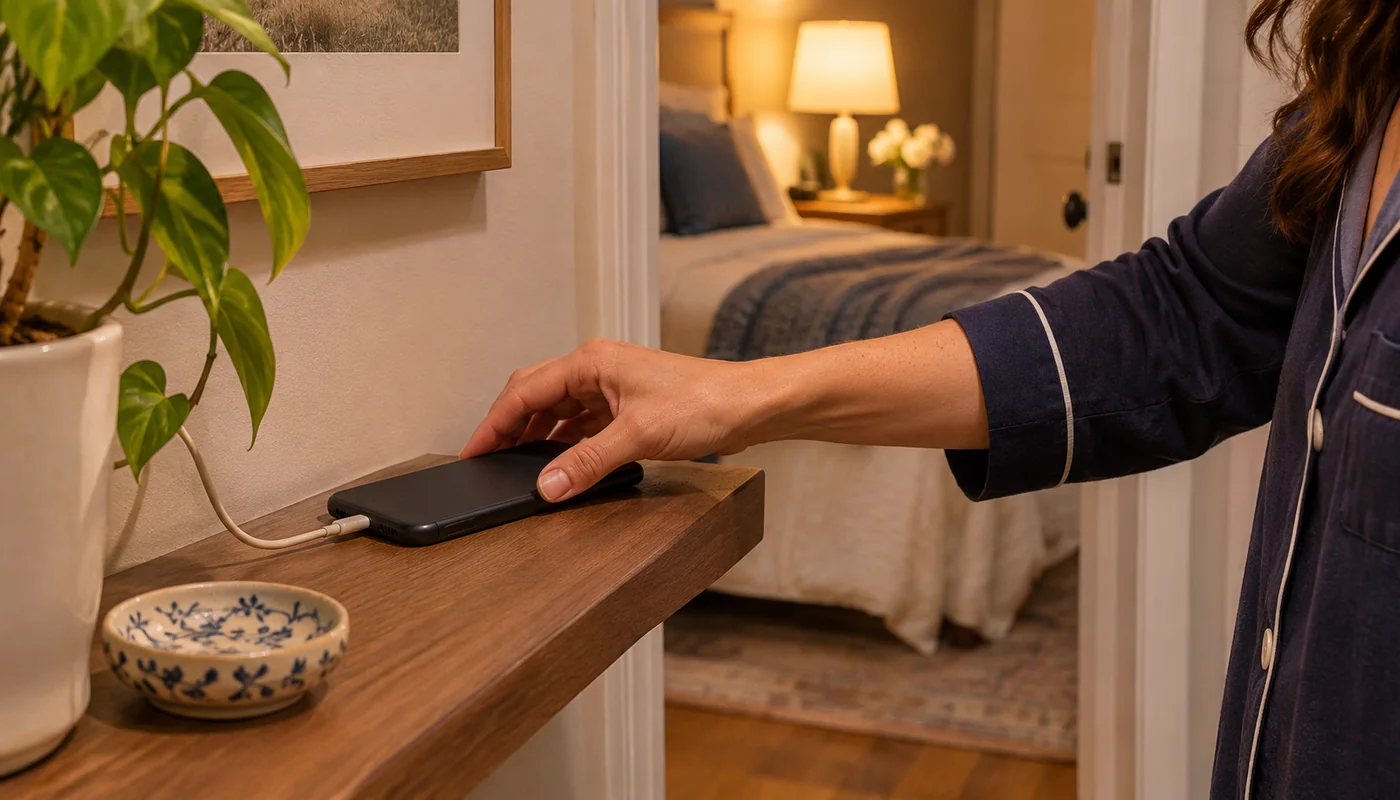
Charge Your Phone Outside the Bedroom
Keeping your phone in another room removes the temptation to check it and prevents nighttime disruptions. Use a traditional alarm clock instead.
Use Do Not Disturb
Set your phone to automatically silence notifications overnight, allowing calls only from important contacts.
Avoid Stimulating Content at Night
If you do use your phone in the evening, avoid work emails, news, social media, and exciting games close to bedtime.
Lower Brightness
Turn screen brightness down and use warm color settings in the evening.
Set a Digital Curfew
Choose a time each evening when screens go off. Some phones allow you to schedule app limits or "downtime."
Replace the Habit
Habits are easier to change when you replace them with something else. Keep a book, journal, or puzzle book by your bed instead of your phone.
If You Wake at Night, Don't Reach for the Phone
Checking your phone at 3 a.m. can wake your brain fully. Try slow breathing or relaxation techniques instead.
Better Pre-Sleep Activities
- Reading a paper book or e-ink reader without a backlight
- Gentle stretching or yoga
- A warm bath or shower
- Journaling or writing a to-do list for tomorrow
- Listening to calming music or a relaxing audio story
- Meditation or slow breathing
- A paper crossword or puzzle
- Talking with your partner
Use Your Phone Well During the Day
Phones aren't the enemy. During the day, they can be useful tools for connecting with others, learning, and keeping your mind active, for example through brain games, language apps, or audiobooks. The key is timing and balance: use screens for stimulation during the day and give your brain a screen-free wind-down at night.
A One-Week Bedtime Phone Challenge
If giving up your bedtime phone habit feels hard, try changing it gradually over a week:
- Days 1 and 2: Turn on Do Not Disturb and lower brightness an hour before bed
- Days 3 and 4: Stop using social media and news in the last 30 minutes before bed
- Days 5 and 6: Put your phone down 45 minutes before bed and read a paper book instead
- Day 7: Charge your phone outside the bedroom overnight
At the end of the week, notice how quickly you fell asleep, how often you woke, and how you felt in the morning. Many people are surprised at how much better they sleep, and how much calmer their evenings feel, once the phone is out of the bedroom. If the change helps, keep it going and make it part of your regular routine.
Frequently Asked Questions
How long before bed should I stop using my phone?
Aim for 30 to 60 minutes before bed.
Is blue light the main problem?
Light plays a role, but mental stimulation and lost sleep time may matter even more.
Do blue light glasses help sleep?
Evidence is mixed. Reducing overall screen use before bed is likely more effective.
Is listening to audio on my phone okay?
Calm audio with the screen off is much less disruptive than scrolling or watching videos.
Are phones worse for teenagers' sleep?
Teens may be particularly sensitive to evening light and engaging content, and many don't get enough sleep. Phone-free bedrooms can help.
Key Takeaways
- Phone use before bed can delay sleep and reduce sleep quality.
- Light, mental stimulation, and lost time all contribute.
- Night mode helps a little, but less screen time helps more.
- Charge your phone outside the bedroom and create a screen-free wind-down.
- Replace scrolling with calming activities like reading or stretching.
Your phone can wait until morning. Give your brain a calm, screen-free end to the day, and you'll likely sleep better and wake up sharper.
This article provides general educational information and is not medical advice. A qualified healthcare professional can help you evaluate choices in relation to your health history, medications, and individual needs.