
Highlights
- Memory champions mostly have ordinary brains and use learnable techniques.
- The memory palace is their most important tool.
- They convert numbers, cards, and names into vivid images.
- Regular practice makes the process fast and automatic.
Some people can memorize the order of a shuffled deck of cards in under 20 seconds. Others can recall hundreds of random digits after seeing them once, or remember the names of a room full of strangers. These are memory athletes, people who compete in events like the World Memory Championships, and their feats can seem almost superhuman.
So are they born with extraordinary brains? The surprising answer is mostly no. Memory champions use learnable techniques, many of them thousands of years old, and they practice them like any other skill. This article explains how they do it and what the rest of us can borrow from their methods.
What Memory Champions Can Do
Memory competitions include events such as:
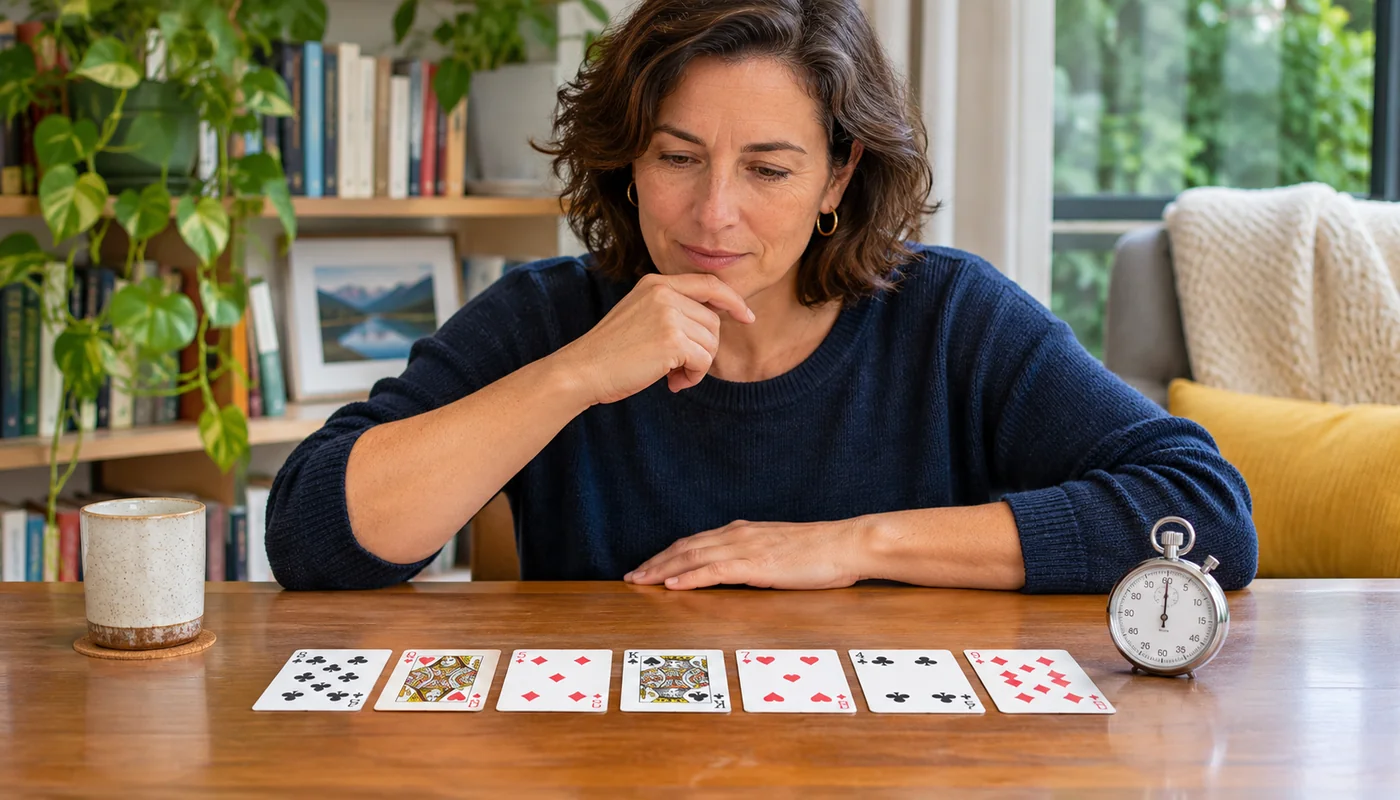
- Memorizing a full deck of shuffled playing cards as fast as possible
- Recalling long strings of random numbers or binary digits
- Remembering names and faces
- Memorizing lists of random words
- Recalling historic dates or abstract images
Top competitors can memorize a deck of cards in well under 30 seconds and recall over a thousand digits in an hour. To an outsider, it looks like magic. To them, it's technique and training.
Are They Born With Special Brains?
Researchers have wondered this too. In a well-known 2003 study, scientist Eleanor Maguire and colleagues in London compared top memory competitors with people of ordinary memory. The memory athletes didn't score higher on general intelligence tests, and their brain structures looked much the same.
The difference showed up in how they used their brains. When memorizing, the champions activated regions involved in spatial memory and navigation far more than the comparison group. Nearly all of them reported using a technique called the method of loci, better known as the memory palace.
Many champions say they had average or even poor memories before they started training. American journalist Joshua Foer famously went from covering the US Memory Championship to winning it a year later, after training with these methods.
The Core Secret: The Memory Palace
The memory palace is an ancient technique often credited to the Greek poet Simonides. It takes advantage of something humans are naturally excellent at: remembering places.
Here's how it works. You picture a building or route you know very well, such as your home. You choose a series of fixed spots along the way, such as the front door, the hallway mirror, the kitchen table, and so on. Then you place a vivid image of each thing you want to remember at each spot. To recall the information, you simply walk through the place in your mind and "see" what you left there.
Memory champions build dozens of these mental palaces, each with many locations. Some use their childhood homes, schools, favorite walks, or even buildings they've visited only once but explored carefully.
Secret Two: Turning Everything Into Images
Numbers and playing cards are abstract and hard to remember. Images are not. So memory athletes convert abstract information into pictures.
Number Systems
Many competitors use a system that assigns an image to every number from 00 to 99, or even 000 to 999. For example, 07 might always be James Bond, 23 might be a basketball star, and 42 might be a towel. A string of numbers then becomes a quick sequence of vivid characters and objects, which they place in a memory palace.
Card Systems
Each card in a deck is given its own person, action, or object. The king of hearts might be a famous romantic hero, the three of clubs might be a golfer. Champions often combine a person, an action, and an object into one scene, letting them pack several cards into a single location.
Names and Faces
For names, they turn the name into an image and attach it to a distinctive feature of the person's face. Someone named Baker with a prominent forehead might be pictured with flour dusting that forehead.
Secret Three: Making Images Memorable
The images champions use are rarely ordinary. They're exaggerated, colorful, funny, moving, or even a bit absurd. The brain pays more attention to things that are unusual, emotional, or surprising, so these images stick.
A plain image of a dog is forgettable. A giant purple dog juggling flaming pineapples on your kitchen table is not.
Secret Four: Practice, Practice, Practice
Techniques get you started, but practice makes champions. Top memory athletes train regularly, often daily, timing themselves and pushing for faster and more accurate recall. Over time, converting information to images becomes nearly automatic, just like reading becomes automatic for children.
Can Ordinary People Learn This?
Yes, and science supports it. In a 2017 study published in the journal Neuron, researcher Martin Dresler and colleagues trained ordinary volunteers in the memory palace method for about 30 minutes a day over six weeks. Their ability to remember lists of words more than doubled. Even more interesting, their brain connectivity patterns shifted to look more like those of memory champions. The improvement was still evident four months later.
In other words, the gap between memory champions and the rest of us is largely a matter of method and practice.
How to Start Using Champion Techniques
Build Your First Memory Palace
Choose your home. Pick ten spots in a natural order, such as front door, coat hook, hallway table, living room sofa, and so on. Walk through them in your mind a few times until the route feels automatic.
Practice With a Shopping List
Next time you need groceries, place a vivid image of each item at each spot. Then go shopping without the list and see how you do.
Create a Simple Number System
Start by giving the numbers 0 to 9 an image based on shape: 1 is a pencil, 2 is a swan, 8 is a snowman, and so on. Use these to remember PINs, phone numbers, or dates.
Train Regularly
Short, regular sessions work best. Brain games that challenge you to remember sequences, cards, numbers, or faces are a fun way to practice. Tracking your scores over time shows your improvement and keeps you motivated.
Benefits Beyond Party Tricks
You may never want to memorize a deck of cards, but these skills carry over into everyday life. People who practice memory techniques often find it easier to:
- Remember names when meeting new people
- Recall speeches or presentations without notes
- Learn vocabulary in a new language
- Keep track of errands and appointments
- Feel more confident about their memory overall
Frequently Asked Questions
Do memory champions have photographic memories?
No. Most say they have ordinary memories. Their skill comes from techniques like the memory palace and lots of practice.
How long does it take to learn memory techniques?
You can use a basic memory palace after just one session. Becoming fast and highly skilled takes weeks to months of regular practice.
Is the memory palace hard to learn?
Not at all. Most people find it surprisingly natural, because humans are very good at remembering places.
Can memory training help as I get older?
Yes. People of all ages can learn these techniques and improve their recall with practice.
Key Takeaways
- Memory champions mostly have ordinary brains and use learnable techniques.
- The memory palace is their most important tool.
- They convert numbers, cards, and names into vivid images.
- Regular practice makes the process fast and automatic.
- Research shows ordinary people can dramatically improve with training.
The secrets of memory champions aren't really secrets at all. They're simple, time-tested methods that anyone can learn. With a little curiosity and regular practice, you can unlock far more of your memory's natural power.
This article provides general educational information and is not medical advice. A qualified healthcare professional can help you evaluate choices in relation to your health history, medications, and individual needs.