
Highlights
- The brain stays adaptable throughout life.
- Puzzles, games, music, languages, and crafts make excellent brain exercises.
- Physical activity and social connection are powerful brain boosters.
- Choose enjoyable activities and keep them challenging.
Staying mentally sharp is one of the most common goals people have as they get older. We want to remember names, follow conversations, manage our own affairs, and enjoy hobbies for as long as possible. The good news is that the brain remains adaptable throughout life, and there are many enjoyable ways to keep it active and healthy.
Brain exercises for seniors don't need to be complicated or expensive. Many are simple, social, and fun. This article shares some of the best brain exercises for older adults, explains why they help, and offers tips for building them into everyday life.
Why Brain Exercise Matters in Later Life
As we age, some changes in thinking are normal. Processing speed may slow a little, and it can take longer to learn new information or recall names. But the brain continues to form new connections throughout life, a quality called neuroplasticity.
Regular mental challenge can help:
- Keep thinking skills sharp
- Build cognitive reserve, the brain's ability to cope with age-related changes
- Boost confidence and mood
- Provide enjoyment, purpose, and social connection
Research suggests that people who stay mentally active tend to maintain their thinking skills better and may have a lower risk of dementia.
The Best Brain Exercises for Seniors
1. Brain Games and Puzzles
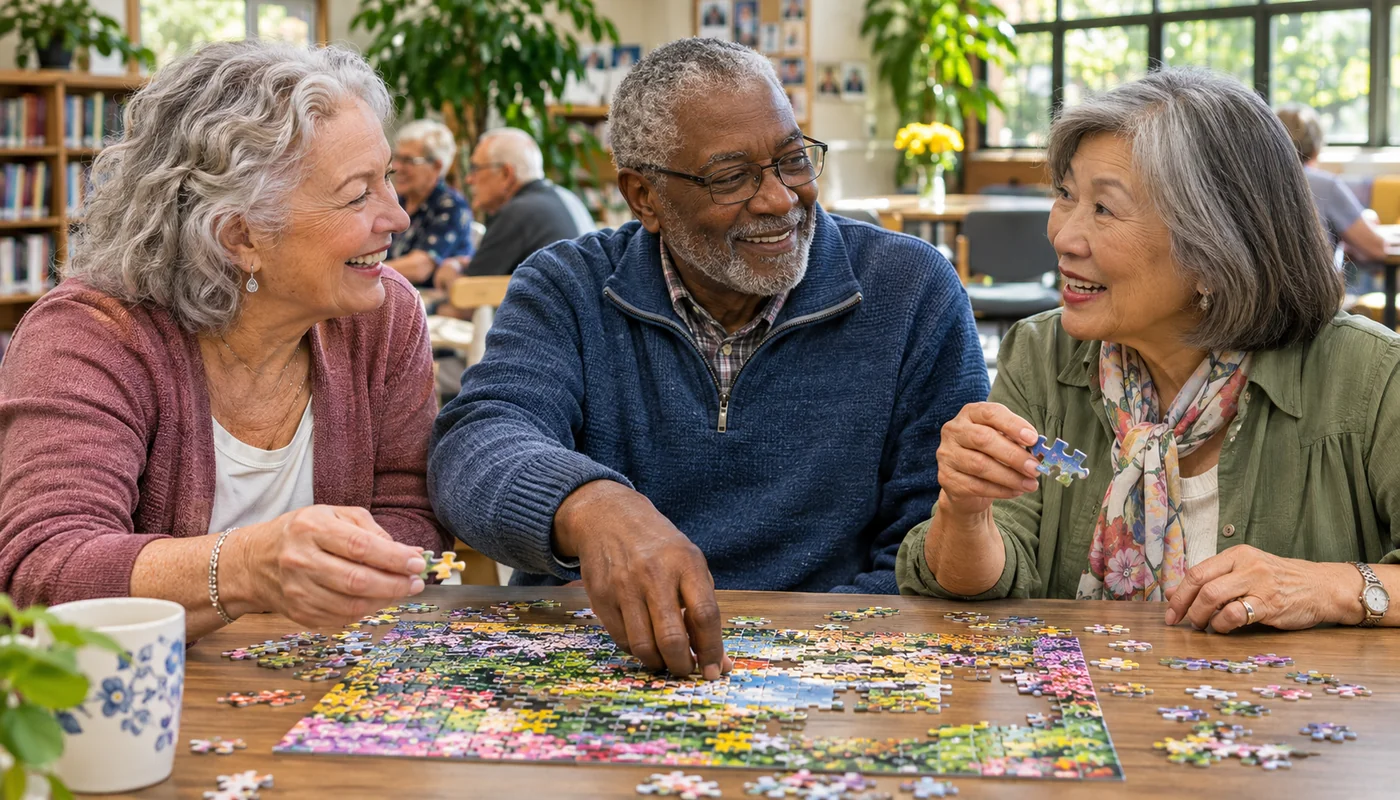
Crosswords, sudoku, word searches, jigsaw puzzles, and logic puzzles all exercise different parts of the brain. Digital brain games that adapt to your level are particularly helpful because they stay challenging as you improve and let you track progress. Try to mix different types to work on memory, attention, problem-solving, and speed.
2. Card and Board Games
Games like bridge, rummy, chess, checkers, Scrabble, and dominoes combine strategy, memory, and social interaction. Bridge, in particular, requires remembering cards, planning, and partnership communication, making it an excellent brain workout.
3. Learning a New Language
Learning a language exercises memory, attention, and listening skills. Apps, classes, and conversation groups make it accessible at any level. It doesn't matter if you never become fluent; the effort itself is valuable.
4. Playing a Musical Instrument
Learning to play an instrument engages many brain areas at once, including those for memory, coordination, hearing, and emotion. Piano, ukulele, guitar, and harmonica are popular choices for beginners.
5. Reading and Book Clubs
Reading builds vocabulary, attention, and imagination. Joining a book club adds discussion, which exercises memory and reasoning and provides valuable social contact.
6. Memory Exercises
Simple memory challenges can be done anywhere:
- Memorize your shopping list, then check how well you did at the store
- Recall the details of your day each evening
- Learn a short poem or song lyrics you've written yourself
- Practice remembering names of new people you meet
7. Arts and Crafts
Painting, drawing, knitting, quilting, woodworking, and pottery engage creativity, fine motor skills, planning, and concentration. Research has found that older adults who take up demanding new hobbies, such as quilting or digital photography, may see improvements in memory.
8. Writing
Keeping a journal, writing letters, or recording your life story exercises memory and language. Writing about your memories can also be a meaningful gift for family.
9. Dancing
Dancing combines physical exercise, memory for steps, coordination, rhythm, and social interaction. Some studies have found that dancing is linked with better cognitive health in older adults. Ballroom, line dancing, and folk dancing are all great options.
10. Tai Chi
Tai chi involves learning sequences of slow, flowing movements, which challenges memory and attention while improving balance and reducing falls.
11. Gardening
Gardening involves planning, problem-solving, learning, and physical activity, plus time outdoors, which can lower stress.
12. Volunteering
Volunteering provides purpose, social contact, and new challenges. It's linked with better well-being and cognitive health in older adults.
Physical Exercise Is Brain Exercise Too
Some of the most effective brain exercises don't happen in your head at all. Regular physical activity increases blood flow to the brain, supports the growth of new brain cells, and is strongly linked with better memory and lower dementia risk. Walking, swimming, cycling, water aerobics, and strength training all help. Aim for at least 150 minutes of moderate activity a week, plus balance and strength exercises.
Make It Social
Social activities exercise the brain in many ways: listening, remembering, reasoning, and understanding emotions. Loneliness is linked with a higher risk of cognitive decline, so combining brain exercises with social contact offers double benefits. Consider:
- Joining a games club at a community or senior center
- Attending group classes
- Playing online games with family or friends
- Taking part in a discussion group or choir
Tips for Getting the Most From Brain Exercises
Choose Activities You Enjoy
You're far more likely to stick with something you find fun and rewarding.
Keep It Challenging
If an activity becomes easy, increase the difficulty or try something new. The brain benefits most from effort.
Mix It Up
Different activities train different skills. A variety of brain exercises gives a more complete workout.
Make It a Habit
Link brain exercises to daily routines, such as a puzzle with breakfast or a brain game after lunch.
Be Patient
Learning new things can feel frustrating at first. That struggle is exactly what helps your brain grow.
Supporting Your Brain in Other Ways
- Sleep well: aim for seven to eight hours
- Eat a brain-healthy diet: vegetables, berries, fish, nuts, and olive oil
- Stay hydrated
- Check your hearing and vision: treating loss helps keep you engaged
- Manage blood pressure and blood sugar
- Look after your mood: seek help for depression or anxiety
A Sample Weekly Brain Exercise Plan
- Monday: Morning walk, afternoon crossword or brain game
- Tuesday: Language lesson and a phone call with a friend
- Wednesday: Tai chi class and a jigsaw puzzle
- Thursday: Book club and memory practice with a shopping list
- Friday: Card games with friends
- Saturday: Gardening or a craft project
- Sunday: Dancing, family time, and a new recipe
Frequently Asked Questions
What is the best brain exercise for seniors?
There's no single best one. A mix of mental challenges, physical activity, and social engagement offers the most benefit.
Do brain games help seniors?
Brain games can improve the skills they train and provide enjoyable mental stimulation, especially as part of an active lifestyle.
How often should seniors do brain exercises?
Daily is ideal, even if only for 15 to 30 minutes.
Can brain exercises prevent dementia?
No activity guarantees prevention, but staying mentally, physically, and socially active is linked with lower risk.
Are brain exercises good for people with memory problems?
Yes. Enjoyable mental activities can support well-being and thinking skills. Choose activities that are challenging but not frustrating.
Do I need technology to exercise my brain?
No. Many excellent brain exercises, like reading, card games, and crafts, need no technology at all, though apps and digital games can add variety.
Key Takeaways
- The brain stays adaptable throughout life.
- Puzzles, games, music, languages, and crafts make excellent brain exercises.
- Physical activity and social connection are powerful brain boosters.
- Choose enjoyable activities and keep them challenging.
- Variety and consistency bring the greatest benefits.
Keeping your brain sharp in later life can be one of the most enjoyable parts of your routine. Pick a few activities that spark your interest, invite a friend, and enjoy the journey of lifelong learning.
This article provides general educational information and is not medical advice. A qualified healthcare professional can help you evaluate choices in relation to your health history, medications, and individual needs.