
Highlights
- Crosswords build vocabulary, word retrieval, and knowledge; sudoku builds logic and working memory.
- Regular puzzlers tend to perform better on tests of memory, attention, and reasoning.
- Puzzles help most when they remain challenging, so increase difficulty over time.
- Mixing puzzle types and adding brain games covers more mental skills.
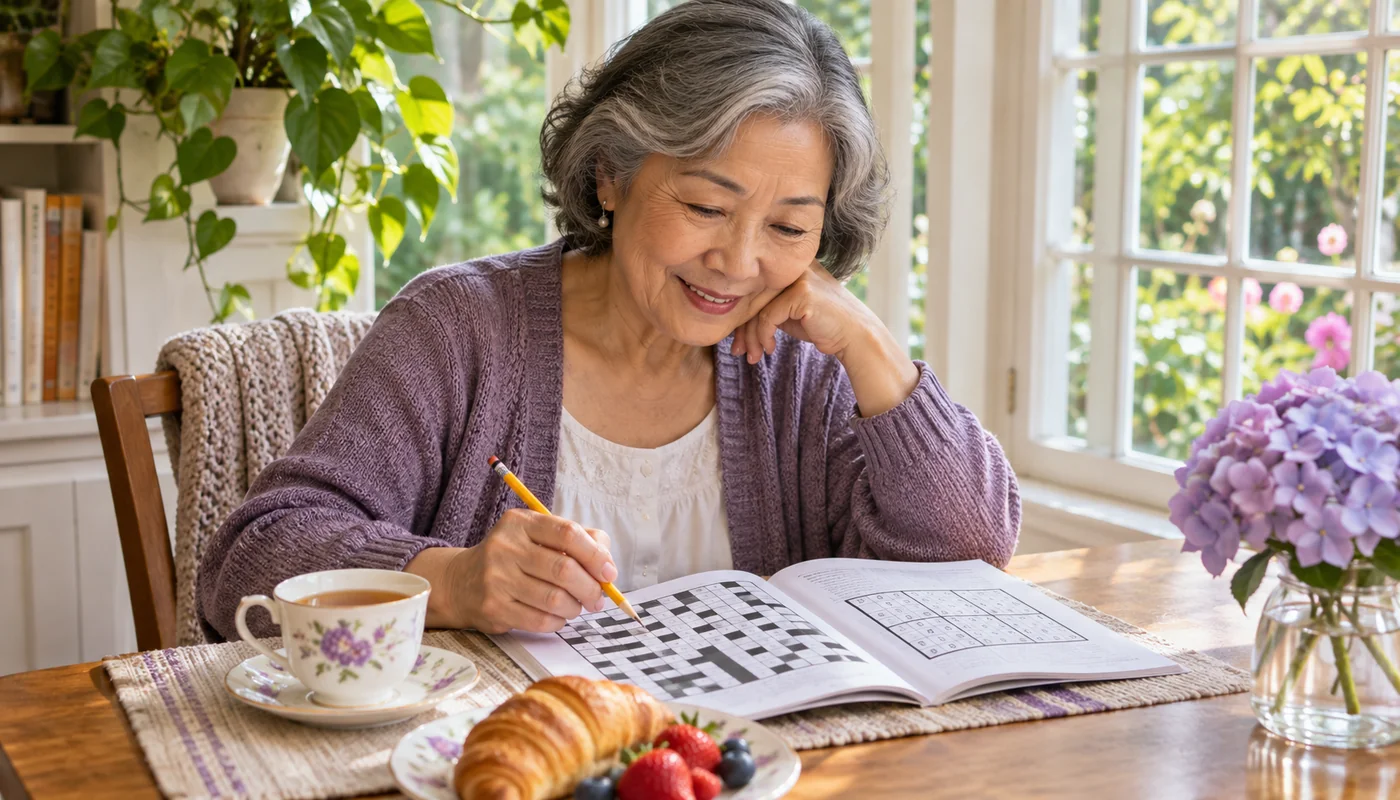
Crosswords and sudoku are two of the world's most beloved puzzles. Many people do them daily with their morning coffee, both for enjoyment and because they've heard puzzles help keep the brain sharp. But do crosswords and sudoku actually help your brain, or are they simply a pleasant way to pass the time?
The good news is that puzzles offer real benefits, and research supports them as part of a mentally active life. Understanding which skills each puzzle builds, and how to get the most from them, can make your puzzle habit even more valuable.
What Crosswords Do for Your Brain
Crossword puzzles exercise several important mental skills:
- Word retrieval: Finding the right word from memory, the same skill that helps you avoid tip-of-the-tongue moments in conversation.
- Vocabulary: Encountering new words and meanings expands your language knowledge.
- General knowledge: Clues draw on history, geography, culture, and trivia.
- Flexible thinking: Cryptic or tricky clues require you to consider multiple meanings and think creatively.
- Working memory: Holding letter patterns in mind while testing possible answers.
What Sudoku Does for Your Brain
Sudoku is a number-placement puzzle, but it requires no math. Instead, it trains:
- Logical reasoning: Deducing where numbers must go based on rules.
- Working memory: Keeping track of possibilities across rows, columns, and boxes.
- Pattern recognition: Spotting relationships and constraints in the grid.
- Concentration: Sustained focus to avoid errors.
- Persistence: Working through harder puzzles builds patience and problem-solving stamina.
What the Research Says
Puzzle Fans Tend to Have Sharper Minds
A large online study from the University of Exeter and King's College London, involving more than 19,000 adults aged 50 and older, found that people who regularly did word and number puzzles performed better on tests of attention, reasoning, and memory. Some frequent puzzlers scored at levels comparable to people years younger on certain measures.
These studies show an association, which means puzzle lovers may already have sharp minds, rather than puzzles making them sharp. But the findings fit with a broader body of research linking mentally stimulating activities with healthier brain aging.
Crosswords vs. Computer Training
A study led by researchers at Columbia University and Duke University compared crossword puzzles with computerized brain training in older adults with mild cognitive impairment. After 78 weeks, the crossword group showed greater improvement on one key cognitive measure and less brain shrinkage than the computer training group. This suggests crosswords can be a valuable mental workout, especially for people who enjoy them.
Mental Activity and Dementia Risk
Long-term studies, such as the Bronx Aging Study, have found that older adults who frequently engaged in mentally stimulating activities, including puzzles, reading, and board games, tended to show memory decline later than those who did so less often.
How to Get More Brain Benefit From Puzzles
Here's an important insight: once a puzzle becomes easy, its benefits shrink. Your brain grows most when it's challenged. If you've done the same difficulty of sudoku or crossword for years, your brain may be running on autopilot.
Increase the Difficulty
Move from Monday's easy crossword to Thursday's or Saturday's tougher ones. Try harder sudoku levels, larger grids, or variants with extra rules.
Try Different Puzzle Types
Variety exercises different skills. Mix in:
- Cryptic crosswords
- KenKen or kakuro (math-based logic puzzles)
- Logic grid puzzles
- Word searches and anagrams
- Jigsaw puzzles
- Brain teasers and riddles
- Brain training games for memory, speed, and attention
Time Yourself
Add a speed element by timing your puzzles and trying to beat your personal best. This adds challenge and engages processing speed.
Solve Without Help
Resist looking up answers too quickly. Struggling a bit is where the real brain work happens.
Make It Social
Solve puzzles with a partner or friend. Discussing clues and strategies adds a social and verbal element, which offers even more stimulation.
Puzzles Are One Piece of the Puzzle
Crosswords and sudoku are wonderful habits, but they mainly exercise specific skills. For broad brain health, combine them with:
- Physical exercise, one of the strongest supports for brain health
- Learning new skills, like an instrument or language
- Social connection
- Good sleep and nutrition
- Targeted training for skills puzzles don't cover much, such as processing speed and reaction time
Frequently Asked Questions
Is sudoku or crossword better for the brain?
Neither is better overall; they train different skills. Crosswords emphasize language and memory, while sudoku focuses on logic and working memory. Doing both gives you a broader workout.
How many puzzles a day should I do?
There's no set number. One or two challenging puzzles a day is a great habit. The key is that they remain challenging, not routine.
Can puzzles prevent dementia?
Puzzles alone can't guarantee protection, but mentally stimulating activities are linked with lower risk and later onset of memory decline. They're a valuable part of a brain-healthy lifestyle.
Are puzzles good for people with memory problems?
Yes, puzzles can be enjoyable and stimulating for people with mild memory problems. Choose levels that are challenging but not frustrating.
What other puzzles are good for the brain?
Word ladders, logic grids, pattern puzzles, jigsaw puzzles, chess problems, and memory games all exercise the brain in different ways. Rotating between several types keeps your mind challenged.
Are online puzzles as good as paper ones?
Yes. The brain benefit comes from the thinking, not the medium. Online versions can even add helpful features like adjustable difficulty, timers, and progress tracking.
Do puzzles help with stress?
Many people find puzzles calming because they focus the mind on a single, satisfying task. That absorbed focus can provide a welcome break from worry and screens.
Should I use a pencil or a pen for crosswords?
Whatever you enjoy! Some people find solving in pen adds a fun challenge that demands more careful thinking. The important thing is to keep the puzzles challenging.
Key Takeaways
- Crosswords build vocabulary, word retrieval, and knowledge; sudoku builds logic and working memory.
- Regular puzzlers tend to perform better on tests of memory, attention, and reasoning.
- Puzzles help most when they remain challenging, so increase difficulty over time.
- Mixing puzzle types and adding brain games covers more mental skills.
- Combine puzzles with exercise, learning, and social activity for the best results.
Your daily puzzle is more than a pastime. It's a workout for your mind. Keep challenging yourself, try new types, and enjoy the satisfaction of every solved grid.
This article provides general educational information and is not medical advice. A qualified healthcare professional can help you evaluate choices in relation to your health history, medications, and individual needs.