
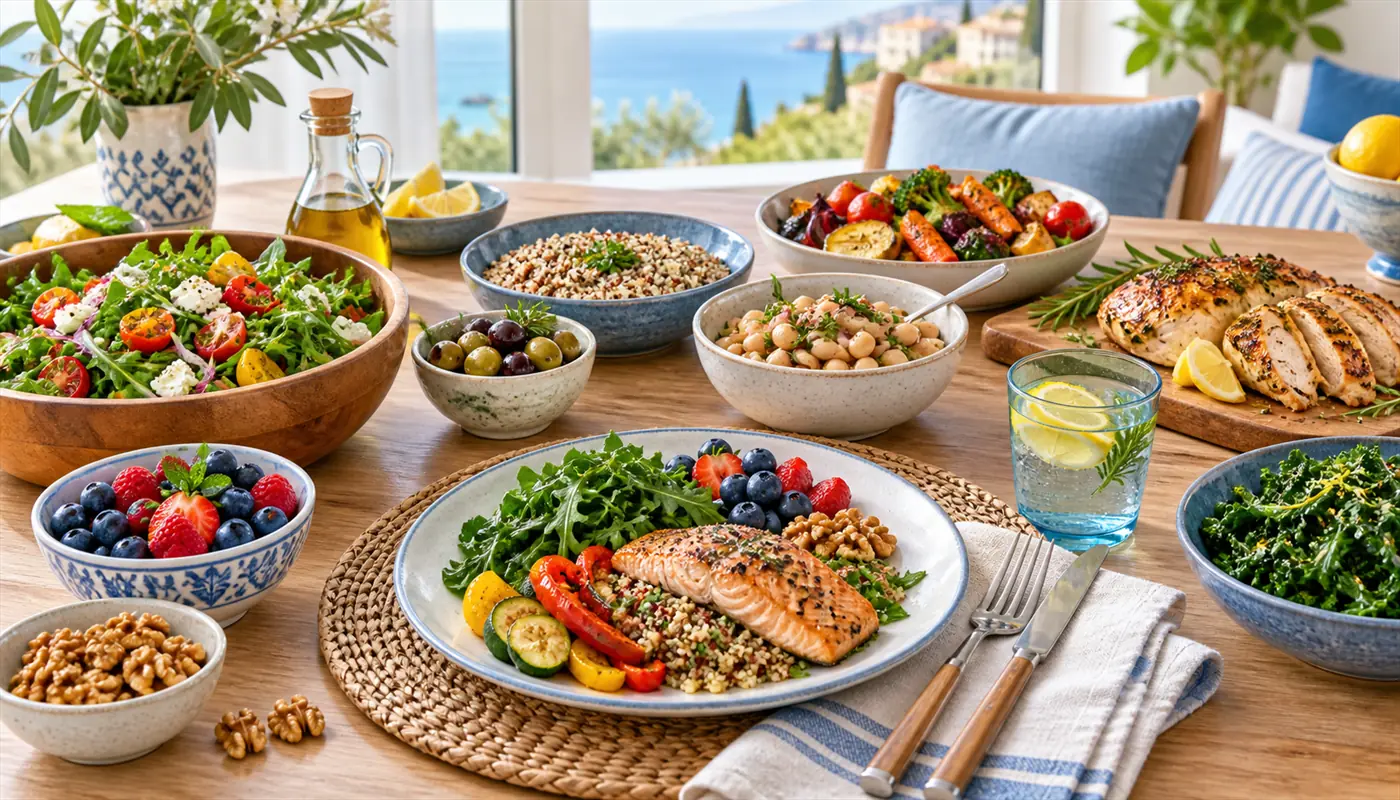
Highlights
- The MIND diet turns familiar foods into a practical pattern for healthy aging.
- The most appealing part is its flexibility.
- Vegetables form a colorful foundation.
- Other vegetables bring variety.
The MIND diet turns familiar foods into a practical pattern for healthy aging. Its name stands for Mediterranean-DASH Intervention for Neurodegenerative Delay, and it blends ideas from Mediterranean and DASH eating with an added focus on foods studied for brain health.
The most appealing part is its flexibility. You do not need specialty products, complicated recipes, or perfect adherence. You can begin by adding more greens, berries, beans, whole grains, nuts, fish, poultry, vegetables, and olive oil to meals you already enjoy.
Build around plants
Vegetables form a colorful foundation. Leafy greens receive special attention in the MIND pattern, so look for easy ways to include spinach, kale, collards, romaine, or mixed greens. Add spinach to scrambled eggs, layer greens into a sandwich, or serve dinner over a handful of chopped lettuce.
Other vegetables bring variety. Tomatoes, peppers, broccoli, carrots, squash, onions, and frozen vegetable blends all count. Let convenience help you make the pattern repeatable.
Choose berries for a naturally sweet favorite
The MIND diet highlights berries, which provide fiber and colorful plant compounds. Fresh berries are wonderful in season, while frozen varieties are available year-round. Stir them into oatmeal, spoon them over yogurt, or warm them into a simple fruit topping.
Let beans and whole grains carry meals
Beans and lentils provide plant protein, folate, minerals, and fiber. Whole grains such as oats, brown rice, barley, quinoa, and whole-grain bread bring texture and satisfying energy. Together, they can become soup, chili, grain bowls, tacos, or hearty salads.
A pantry containing canned beans and quick-cooking grains makes brain-friendly meals possible even on busy evenings.
Include fish, poultry, nuts, and olive oil
Fish contributes protein and, depending on the variety, omega-3 fats. Salmon, sardines, trout, and herring are rich in DHA and EPA. Poultry provides another versatile protein choice.
Nuts make an easy snack or topping, while olive oil works in dressings and cooking. These foods help create the unsaturated-fat profile common to Mediterranean-style eating.
Try the brain-friendly plate
Use a simple four-part formula:
• Start with vegetables, including leafy greens when convenient. • Add beans, fish, poultry, eggs, yogurt, or another nourishing protein. • Include a whole grain or other satisfying high-fiber carbohydrate. • Finish with olive oil, nuts, herbs, spices, or a flavorful dressing.
Breakfast could be oatmeal with berries and walnuts. Lunch might be lentil soup with a green salad. Dinner could feature salmon, brown rice, and roasted vegetables. These are ordinary meals with impressive nutritional teamwork.
What the research means
Observational studies have connected Mediterranean and MIND-style patterns with favorable cognitive-aging outcomes. A major clinical trial found small cognitive improvements in both the MIND group and a comparison group receiving healthy-eating guidance and modest calorie reduction. Researchers are continuing to learn which elements provide the greatest benefit.
That balanced picture still gives adults a positive reason to use the pattern: its foods support cardiovascular and overall health, and what benefits the heart often supports the brain’s needs as well.
Start with a seven-day upgrade
Choose one addition in each category: a leafy green, a berry, a bean, a whole grain, a nut, a fish, and olive oil. Use one each day for a week. Keep the combinations you love and build from there.
The MIND diet is best treated as a direction rather than a test. Every colorful, fiber-rich, thoughtfully prepared meal is another useful step toward the brain-power routine you want after 40.
Invite someone to join you for one meal. Sharing a colorful lunch or fish dinner adds conversation and connection—two qualities that make a healthy eating pattern more enjoyable and memorable.
Sources and Further Reading
This article provides general educational information and is not medical advice. A qualified healthcare professional can help you evaluate choices in relation to your health history, medications, and individual needs.