
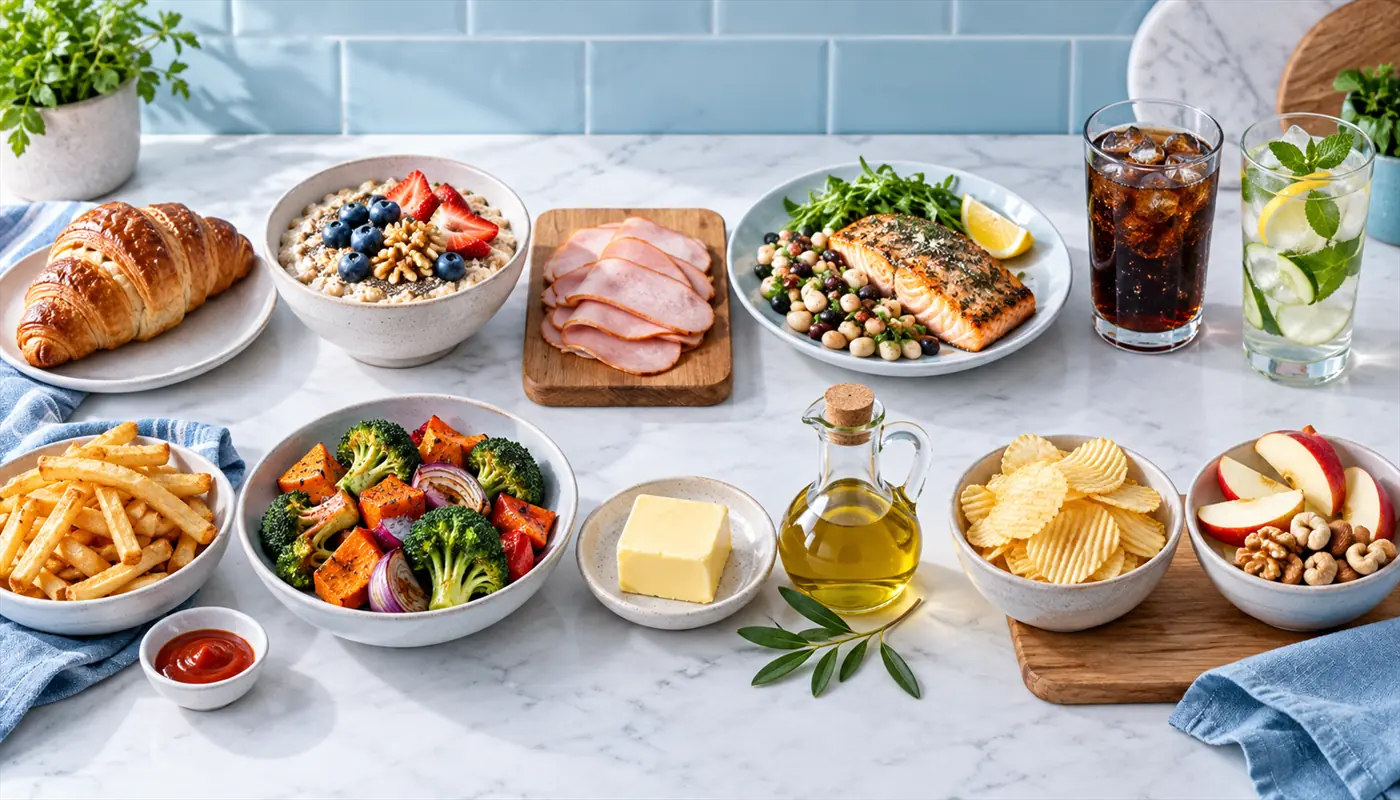
Highlights
- People often search for “bad food for the brain,” but a more useful question is: what can I eat more often to build a brain-friendly pattern?
- These seven upgrades draw on Mediterranean, DASH, and MIND-style eating patterns studied for cardiovascular and cognitive health.
- Try replacing a pastry-only breakfast with oatmeal, berries, and walnuts, or pair whole-grain toast with eggs and fruit.
- You can still enjoy a favorite baked treat.
People often search for “bad food for the brain,” but a more useful question is: what can I eat more often to build a brain-friendly pattern? One meal does not define your health, and favorite foods do not need dramatic labels. The biggest opportunity comes from everyday swaps that add fiber, healthy fats, colorful plants, and steady nourishment.
These seven upgrades draw on Mediterranean, DASH, and MIND-style eating patterns studied for cardiovascular and cognitive health.
Swap a low-fiber breakfast for lasting nourishment
Try replacing a pastry-only breakfast with oatmeal, berries, and walnuts, or pair whole-grain toast with eggs and fruit. Whole grains provide fiber and satisfying carbohydrates, while protein and healthy fats help make the meal feel complete.
You can still enjoy a favorite baked treat. Pair a smaller serving with Greek yogurt and berries to add nutritional teamwork.
Swap some processed meats for fish, poultry, or beans
Build sandwiches and bowls around tuna, salmon, chicken, hummus, lentils, or white beans. These choices provide protein, and fish can contribute omega-3 fats. Beans add fiber and folate at the same time.
Begin with one lunch or dinner each week. A bean-and-vegetable soup or salmon bowl can make the change feel like discovery rather than sacrifice.
Swap some fried meals for roasted or grilled favorites
Roasting creates crisp edges and deep flavor with vegetables, potatoes, fish, and poultry. An air fryer can offer another convenient route to appealing texture. Add herbs, garlic, paprika, citrus, or a yogurt-based sauce so the upgraded meal feels generous and enjoyable.
Swap solid cooking fats for olive oil more often
Olive oil is a central feature of Mediterranean and MIND-style patterns. Use it for sautéing, roasting, and salad dressing. Blend it with lemon, vinegar, mustard, or herbs for a quick dressing that makes vegetables and beans more inviting.
Swap sugary drinks for flavorful hydration
Water becomes more interesting with citrus, cucumber, mint, or frozen berries. Unsweetened green or black tea provides hydration and plant compounds, plus modest caffeine if you enjoy it. Sparkling water can bring the celebratory feeling of bubbles without becoming a dessert in a glass.
Swap packaged snack defaults for smart pairings
Create snacks from two useful parts: produce plus protein or healthy fat. Try an apple with peanut butter, berries with yogurt, vegetables with hummus, or a small handful of nuts with fruit. Air-popped popcorn offers a whole-grain option with satisfying crunch.
This is not about making every snack “perfect.” It is about keeping appealing choices close enough to become automatic.
Swap a daily rich dessert for fruit-forward variety
Berries, baked apples, frozen grapes, or yogurt with fruit can provide color and natural sweetness. A little dark chocolate with nuts or berries can feel special while keeping the overall pattern balanced. Save other desserts for moments when you truly want and enjoy them.
Swap all-or-nothing thinking for a weekly pattern
The most important upgrade may be your mindset. Brain-friendly eating is built across dozens of meals, not judged by one plate. Add leafy greens to lunch, beans to soup, fish to Friday dinner, and berries to breakfast. Repetition gradually changes the pattern without requiring a rigid menu.
Choose one swap that sounds delicious and repeat it three times this week. Then add another. Positive changes last when the new choice is convenient, flavorful, and connected to how you want to feel.
Your brain shares many priorities with your heart and body: reliable energy, healthy circulation, adequate nutrients, movement, and rest. Every satisfying food upgrade can support that larger picture while making the day taste better.
Sources and Further Reading
This article provides general educational information and is not medical advice. A qualified healthcare professional can help you evaluate choices in relation to your health history, medications, and individual needs.