
Highlights
- The best foods for memory and concentration are not rare or complicated.
- No single meal creates instant brain power.
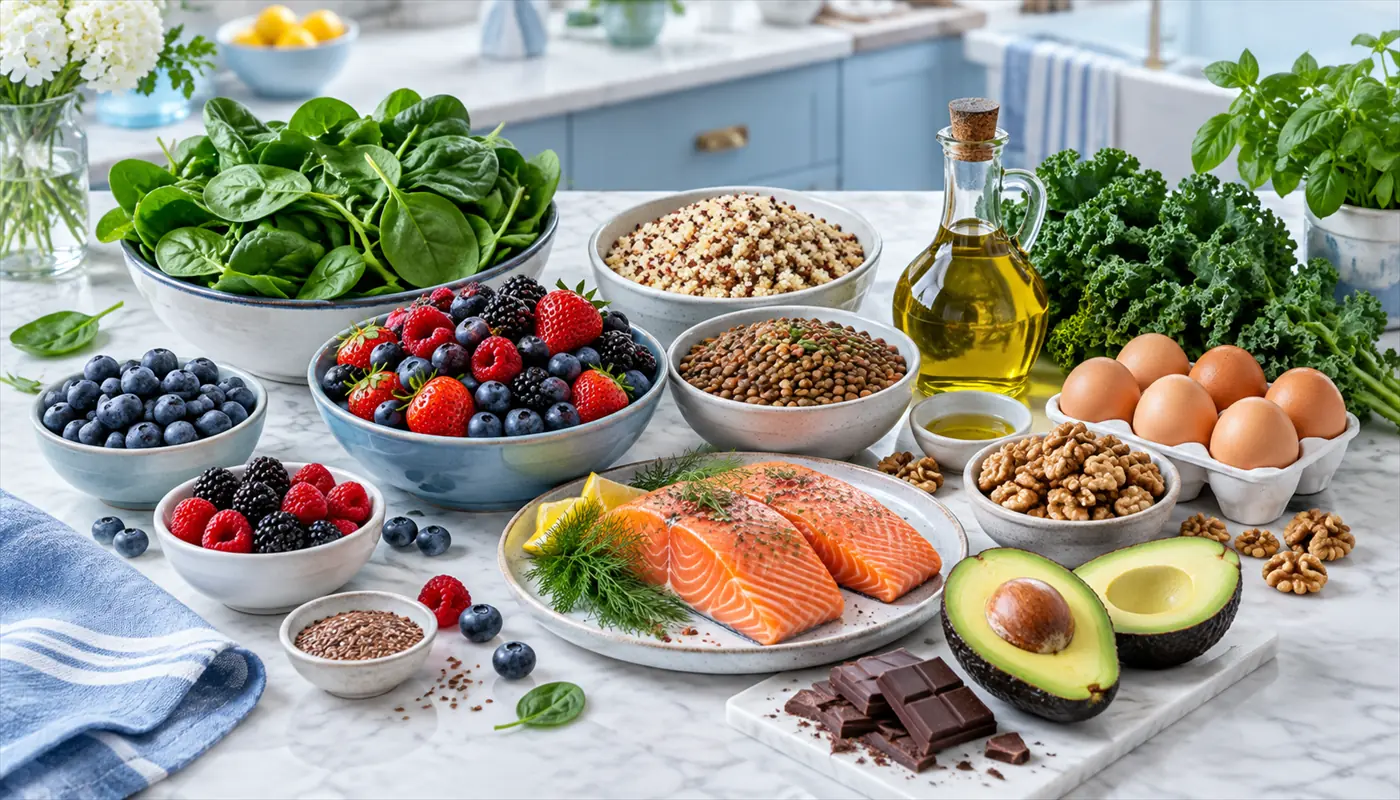
- Spinach, kale, collards, romaine, and other greens provide folate, vitamin K, carotenoids, and additional plant compounds.
- Blueberries, strawberries, blackberries, and raspberries deliver fiber, vitamin C, and colorful flavonoids.
The best foods for memory and concentration are not rare or complicated. They are familiar ingredients that contribute healthy fats, fiber, vitamins, minerals, and colorful plant compounds to an overall nourishing pattern. Research on Mediterranean and MIND-style diets suggests that combinations of these foods may support cognitive health as adults age.
No single meal creates instant brain power. The encouraging opportunity is that every shopping trip gives you another chance to build the pattern.
1 Leafy green vegetables
Spinach, kale, collards, romaine, and other greens provide folate, vitamin K, carotenoids, and additional plant compounds. Add spinach to eggs, use greens as a sandwich layer, or stir chopped kale into soup. Frozen greens make a convenient backup.
2 Berries
Blueberries, strawberries, blackberries, and raspberries deliver fiber, vitamin C, and colorful flavonoids. Enjoy them with yogurt, oatmeal, or nuts. Frozen berries are nutritious, affordable, and ready whenever you want them.
3 Fatty fish
Salmon, sardines, trout, herring, and mackerel provide DHA and EPA omega-3 fats. DHA is an important component of brain cell membranes. Fish also adds high-quality protein, making it a valuable centerpiece for a brain-friendly meal.
4 Nuts
Walnuts, almonds, pistachios, and other nuts combine unsaturated fats, fiber, minerals, and satisfying crunch. Keep a small portion available for snacks or sprinkle chopped nuts over salads, yogurt, vegetables, and whole-grain cereal.
5 Beans and lentils
Beans, chickpeas, peas, and lentils provide plant protein, fiber, folate, and slow-digesting carbohydrates. They work in soups, salads, bowls, dips, and tacos. Canned varieties make this brain food especially easy to use.
6 Whole grains
Oats, barley, brown rice, quinoa, and whole-grain bread supply fiber and steady meal energy. Pair a whole grain with protein and produce for a satisfying combination that supports your entire day.
7 Extra-virgin olive oil
Olive oil is a signature fat in Mediterranean and MIND-style eating. Use it in salad dressing, brush it onto vegetables, or drizzle a small amount over beans and grains. It carries flavor while replacing less-unsaturated cooking fats.
8 Eggs
Eggs provide protein along with choline, a nutrient the body uses to make acetylcholine, a chemical messenger involved in memory. Pair eggs with vegetables and whole-grain toast for a colorful breakfast or quick dinner.
9 Colorful vegetables
Peppers, tomatoes, carrots, broccoli, beets, squash, and other deeply colored vegetables contribute varied nutrients and plant compounds. Different colors often signal different nutritional strengths, so let variety make the plate visually appealing.
10 Water and unsweetened tea
Your brain depends on the same steady hydration that supports the rest of your body. Keep water visible and flavor it with citrus or berries. Green and black tea also supply fluid and natural plant compounds, with modest caffeine for people who enjoy it.
Turn the list into a weekly rhythm
Choose two foods to add rather than trying to rebuild your menu overnight. Put berries in tomorrow’s breakfast, add beans to lunch, or plan fish with leafy greens for dinner. The following week, bring in another favorite.
Use convenience confidently. Frozen vegetables and berries, canned beans and fish, microwaveable whole grains, and prewashed greens can create excellent meals with minimal preparation.
The most powerful brain food is an eating pattern you enjoy enough to repeat. Combine these ingredients with restorative sleep, regular activity, social connection, and meaningful learning. Together, they support a stronger foundation for memory, concentration, and healthy aging after 40.
Create a “brain-food shelf” in the pantry or refrigerator where several favorite ingredients stay visible together. When berries, nuts, beans, whole grains, and greens are easy to find, assembling a nourishing meal requires fewer decisions.
Sources and Further Reading
This article provides general educational information and is not medical advice. A qualified healthcare professional can help you evaluate choices in relation to your health history, medications, and individual needs.